Kansas and the U.S. are running out of medical providers. K-State delivers one key piece to the solution.
When your kid has a fever of 103 or you break a leg or you’re in a serious accident, you need immediate care. But for many Kansans, that’s not possible. The closest medical care could be more than an hour away.
Here’s the sober diagnosis: Ninety-two of Kansas’ 105 counties lack adequate medical care, and rural Kansas is hit hardest. Only one in seven Kansans have a primary care provider, and the state needs at least 377 additional primary care physicians to meet demand.
It takes a minimum of seven years to train a physician, most of whom will go into a specialty and not primary care. And there aren’t even enough future doctors in medical school now to address the huge need for physicians.
So what is Kansas, and the nation, to do to fill this ever-widening gap?
A program built for Kansas
K-State’s physician assistant program delivers one part of a solution.
Wichita State University has had a PA program for more than 50 years, but they alone couldn’t keep up with the growing demand. So K-State stepped up into its land-grant role, launching its own PA program in 2022.
“There are so many communities that have no medical provider and many who are at risk of losing theirs,” said Amy Fitzgerald, director of the Kansas State University Physician Assistant Program. “Probably about two-thirds of all current family practice doctors in Kansas are approaching retirement. So it’s important to get us aligned with those physicians to help with the transition of care for the communities they serve.”
What is a physician assistant?
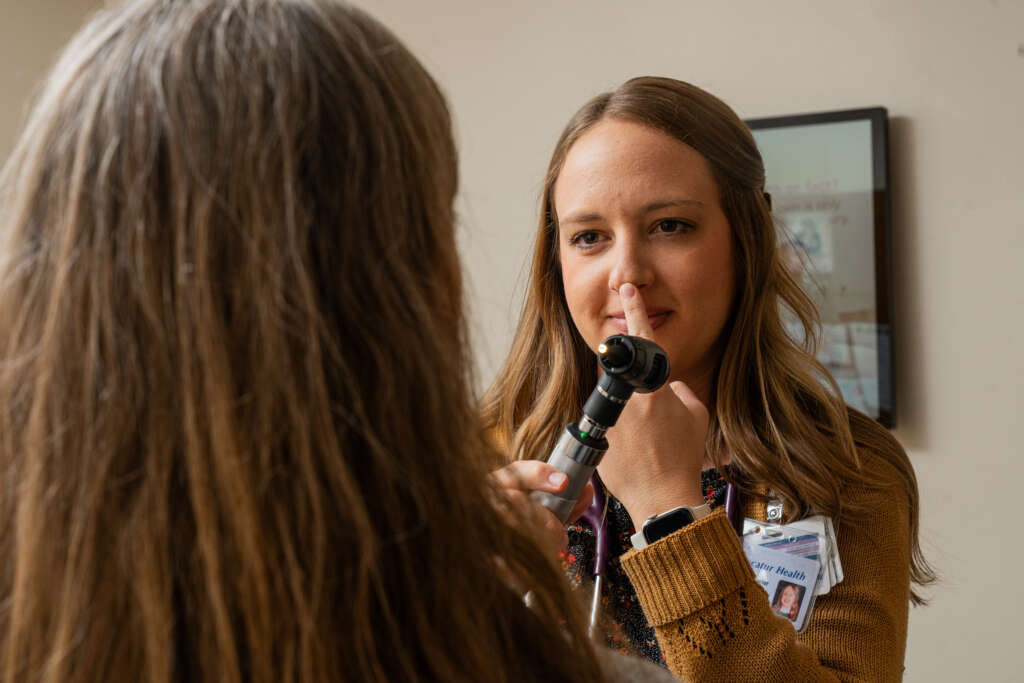
PAs are nationally certified and licensed medical professionals who work on health care teams with physicians and other providers. PAs can perform about 80% of what a physician provides, and they can be trained and certified in less time than doctors. K-State’s program lasts 27 months: 12 months of in-class learning followed by 11 rotations, each about five weeks long.
“We teach everything from birth to death,” Fitzgerald said. “We have special courses just for pediatrics and geriatrics, then we teach everything in between. Most rural communities need that broad general practice. PAs are flexible and can adapt to almost any type of situation.”
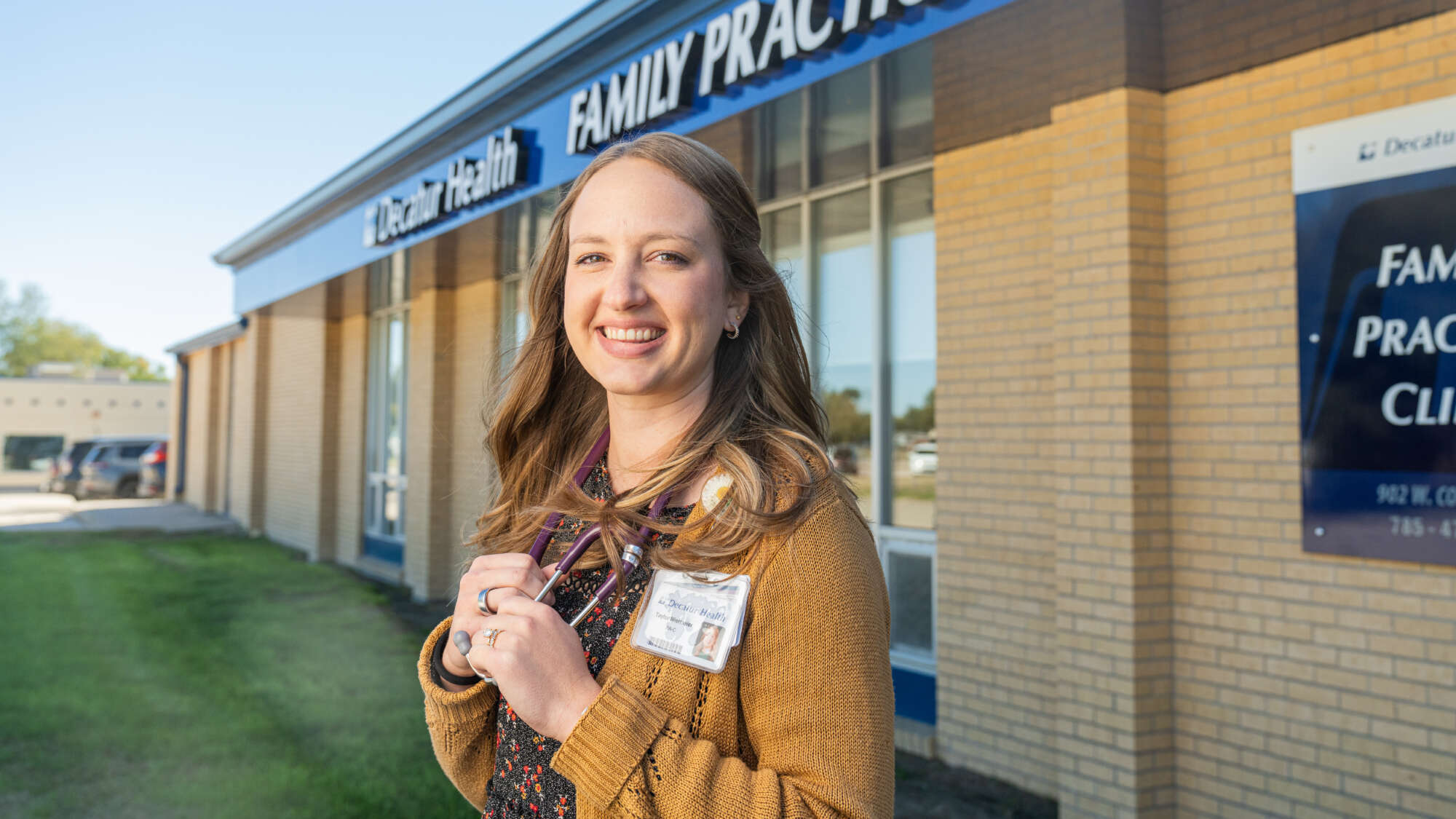
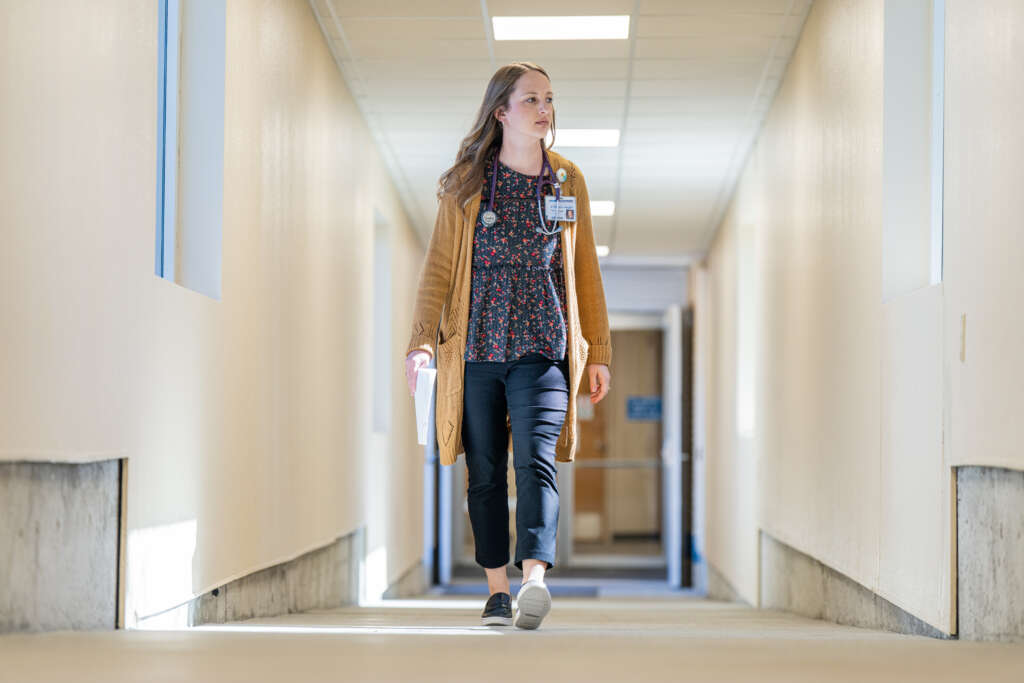
And “everything” is exactly what Taylor Niermeier faces working at Decatur Health in Oberlin, Kansas.
The rural reality
Niermeier graduated from K-State’s first cohort of PA students in 2024 and accepted a job with Decatur Health, where she’d done her primary care rotation. It’s also near where she grew up and where her husband farms.
“It takes a lot of connecting the right people with the right facility,” Niermeier explained. “You’re not going to be able to send just any person out to rural health care and have a good fit for the community and for the person themselves. You have to enjoy living in a rural area.”
While rural Kansas is alluring with its small-town charm, close-knit communities and scenic landscapes, it also comes with struggles.
Decatur County in northwest Kansas has a population of 2,689. Nearly 30% are over the age of 65, and 45% of school children qualify for free or reduced lunch. In a 2024 health needs assessment conducted by the county, residents identified the top five issues facing their community: mental health services, dental care, drug and alcohol abuse, health care staffing and housing. But Niermeier said the biggest obstacle is poverty and how that affects people’s needs and their access to care.
“We’re a jack-of-all-trades in rural primary care, but there’s a limit to what we can do,” she said.
Oberlin, the largest town in the county with the only health care facility, lacks a dentist, a weekend pharmacy or an OB/GYN to deliver babies. And the specialists — in areas such as cardiology, pulmonology, rheumatology and surgery — come just once or twice a month. To access this care, residents have to drive 30 minutes to an hour, which is not always possible.
“So if a woman goes into labor or there’s a bad farming accident, we do our best here until we can get you out the door,” Niermeier said. “We have the bare minimum equipment that we need to essentially get you on the road to a higher level of care as fast as possible.”
But traumas and emergencies are rare. What Niermeier and her colleagues deal with mostly are day-to-day preventive and primary care.
“The best part about being a PA in a rural community is you get to know your patients. You get to know everything about them, and they almost take you on as a part of their family in some instances,” she said. “But that can also be the worst part of working in rural medicine because you take the hits harder. You’re the one who gives them the bad news. You hold their hand while they die.”
A desert oasis
But at least people in Decatur County have health care providers — not all Kansans are as fortunate. Decatur Health’s efforts have been recognized with awards from the Kansas Hospital Association for the past two years. And they’re addressing those top needs identified through the county’s health assessment, especially mental health.
“I don’t know the root cause, but there’s a high poverty rate here and lots of drug use — fentanyl, meth, weed, you name it. And along with that comes very poor mental health,” Niermeier said. “We live in a mental health desert. Before now, we didn’t have a therapist in the county. The closest one was 30 minutes away at High Plains Mental Health in Norton County.”
Recognizing a need, High Plains added a therapist in Oberlin to see patients one day a week. But demand was so high that it’s been expanded to two days a week, and the therapist is fully booked.
Bridging a critical gap
The U.S. health care industry faces so many challenges: out-of-reach costs for patients, lack of funding for providers, distrust of medical care and a lack of nearby access to care, plus the increasing problem of not enough health care providers.
K-State’s PA program can at least address that last problem.
“The PA program is extremely vital,” Fitzgerald said. “We can train a PA in 27 months from the time they start until they graduate, and they’re able to go out in the community and do nearly everything a physician can do. PAs are the piece that will keep everything going.”
The highest projected increases in health care job openings between now and 2032 are for nurse practitioners (43 percent, or 1,393 jobs) and physician assistants (27 percent, or 242 jobs). Both NPs and PAs can see patients and write prescriptions.
The interest in K-State’s program mirrors this spike in demand. The program received around 900 applications for the cohort starting in January, competing for just 44 spots. And to increase the odds that those new PAs will stay in Kansas, K-State ensures that 30-40% of each new class has a connection to Kansas. Of the two cohorts that have already graduated, around 50% stayed in Kansas.
“I think we’re going to see a big crunch as these older providers in rural Kansas, who probably grew up in those communities or have lived there for a long time, retire,” Fitzgerald said. “It’s a big burden on those communities to try to find physicians or PAs. And while technology and telehealth might help, you can’t replace the provider who’s going to come to your house.”
Critical Condition
- 70% of Kansas counties have primary care shortages
- 84 of the 125 rural Kansas hospitals are operating at a financial loss
- 63 Kansas hospitals are at risk of closing
- 41st: Kansas’ national ranking for number of physicians per capita
- 83 million Americans live in areas that don’t have sufficient access to a primary care physician
- 86,000+: The Association of American Medical Colleges projects a shortage of up to 86,000 physicians by 2036, including as many as 48,000 primary care doctors