Avian flu isn’t just for birds anymore. K-State’s Jürgen Richt and other researchers reveal how the virus infects dairy cattle
For the past two years, avian influenza has taken a huge toll on worldwide populations of wild birds – more than 414, 000 birds have been affected in the U.S. alone. Now the avian flu has been detected in dairy cattle in the United States.
A K-State professor is a world leader in proving why avian flu isn’t just for birds anymore.
How did cows get a bird disease?
K-State’s own Jürgen Richt, regents and university distinguished professor of diagnostic medicine pathobiology, partnered with Martin Beer from Friedrich Loeffler Institute in Germany to lead research teams in the pursuit of insight on the likely modes of transmission.
They inoculated calves and lactating cows with the virus and observed that the calves contracted moderate viral replication with no transmission to the other calves. The lactating cows, however, developed mammary gland infections, fever and milk reduction. And drastic increases of the virus were found in the milk.
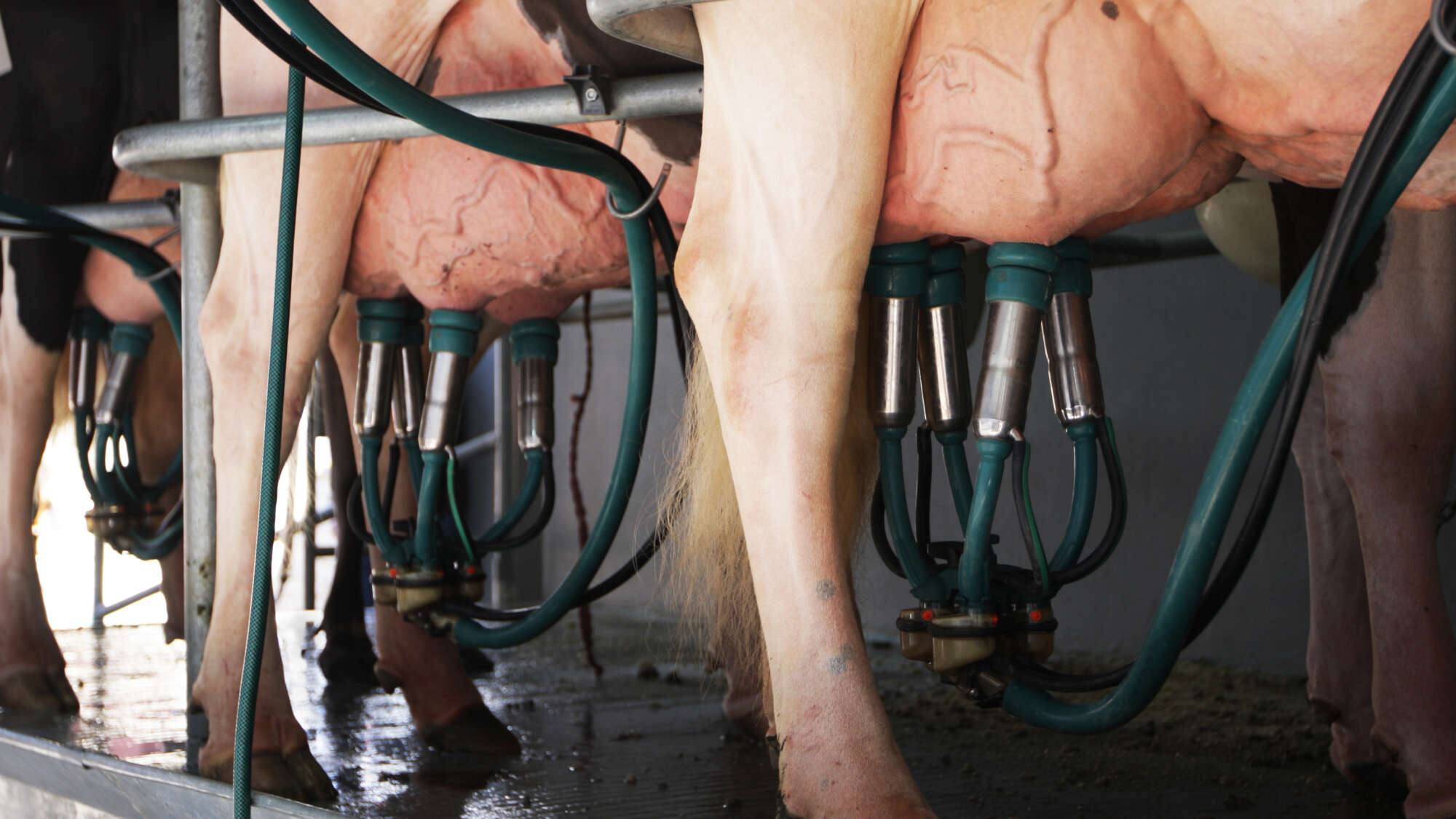
Richt and Beer concluded that the virus is spread through the milking process itself and published a groundbreaking study on how to inactivate the virus in 2024.
The K-State advantage
With Richt as director of K-State’s Center on Emerging and Zoonotic Infectious Diseases and his access to the Biosecurity Research Institute, the university stands as the leading investigator for outbreaks of this nature.
“It’s important to note that we have established a team that can do this type of research,” Richt said. “We are well trained and we know how to handle all the aspects that are involved in a high-containment research environment.”
But Richt’s research did not stop with the cows.
“We have done experiments in pigs just to see how this virus works in them,” he said. “It’s good news for the swine industry. There’s not much happening with this virus, but we still need to be vigilant. There’s incredible environmental contamination with this strain. If we don’t prevent it from spreading now, then perhaps in a decade — maybe two, three or four decades — it could become a plague.”
By Kate Ellwood
Curated from Dilemma in the Dairy