A K-State researcher is exploring how to turn swine waste into aviation fuel
Pigs can’t fly, but their waste may soon fuel airplanes into the sky.
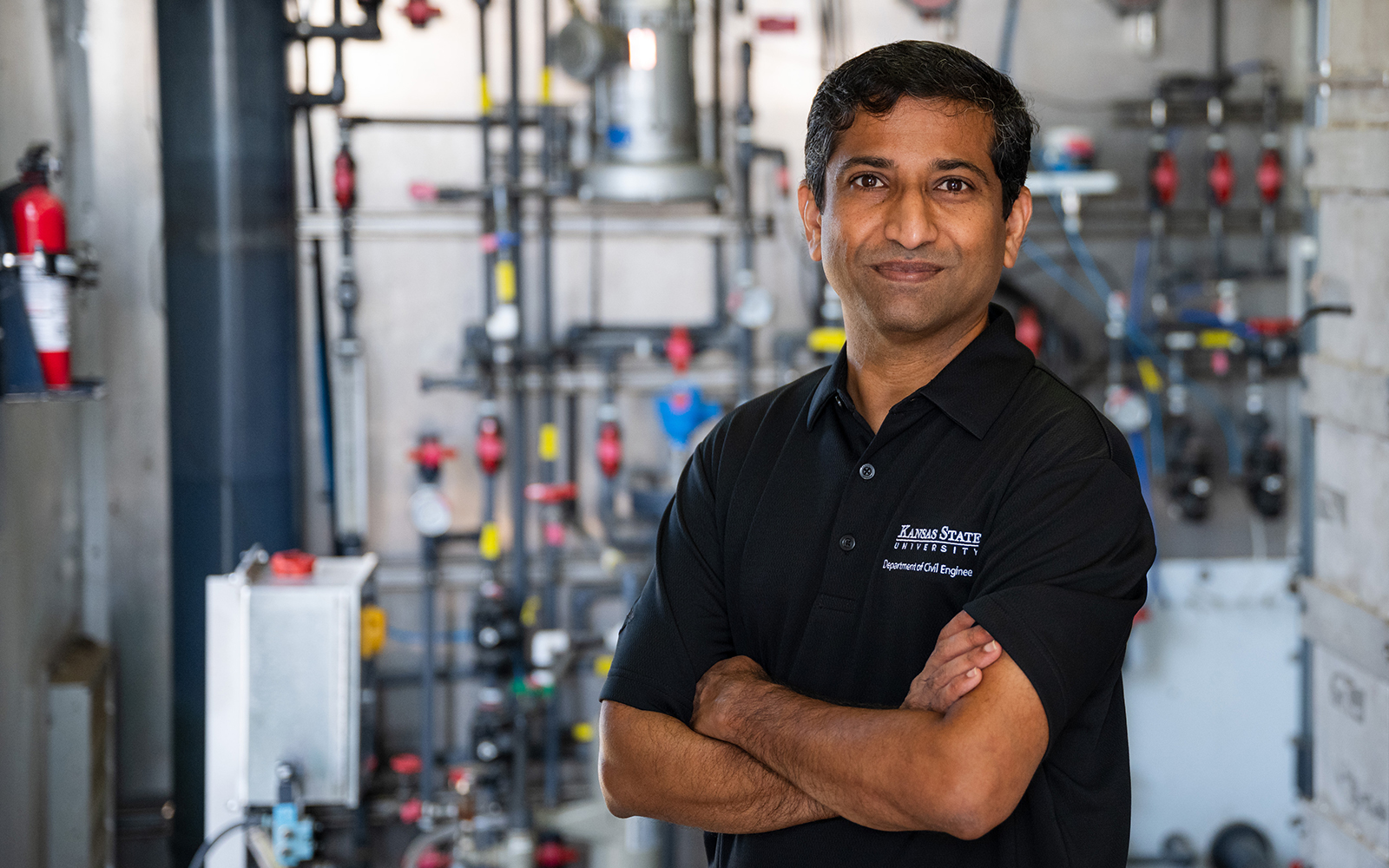
K-State associate professor of civil engineering, Prathap Parameswaran, is evaluating the possibility of turning swine waste into synthetic aviation fuel. This project could be viable through the transformation of anaerobic membrane reactors, or AnMBRs, into fuel.
What are AnMBRs?
AnMBRs are a modern technology in the wastewater treatment process that removes organic pollutants and produces biogas, a renewable energy source.
This technology would be used in swine waste streams to turn the biogas into aviation fuel.
What has happened so far?
Parameswaran has received a more than $600,000 grant from BioMADE, a manufacturing innovation institute supported by the U.S. Department of Defense. He will collaborate with Quasar Energy Group and Iowa State University, which is leading the project.
“Our role in this project is to validate the use of anaerobic membrane reactors as a platform for transforming these waste products, including fats, oils and greases, into bio manufactured aviation fuel precursors,” Parameswaran said. “We are essentially running pilot-scale production of this novel technology, while conducting vital research and development to validate its versatility and scalability.”
The fuel precursors created by Parameswaran’s team through the water treatment process will then be separated and purified before being transformed into aviation fuel.
“Synthetic aviation fuels are a strategic resource for the U.S. Department of Defense,” Parameswaran said. “While there are other ways to turn waste into fuel, many rely on federal incentives or are inefficient. Use of anaerobic membrane reactors shows real potential as a promising platform; it just needs to be piloted effectively.”
By Kate Ellwood