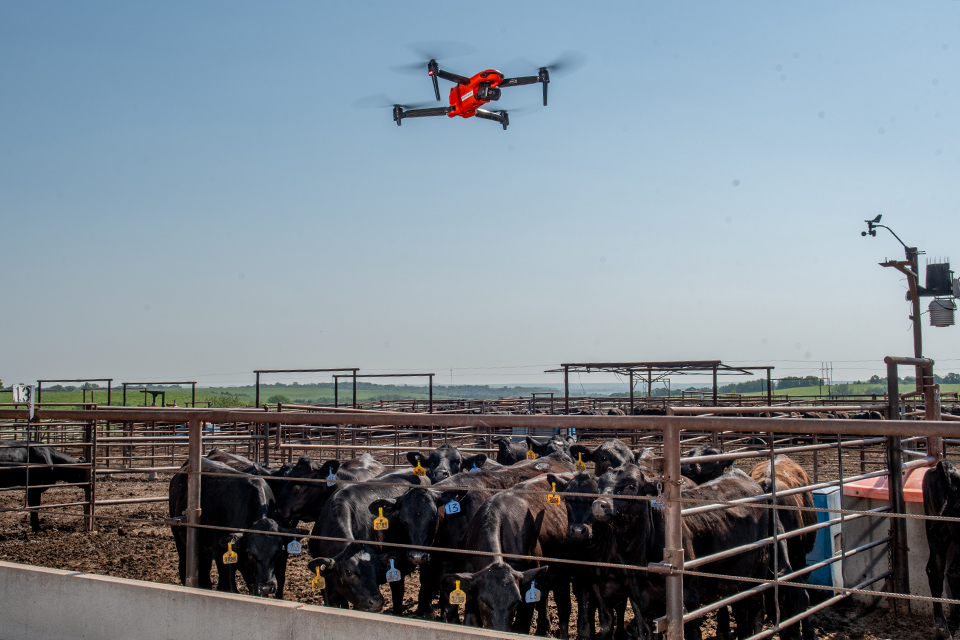
Drones equipped with thermal cameras are transforming how cattle emissions and feedlot conditions are monitored
Human hands can only go so far in monitoring cattle herds. Scientists and producers rely on bulky equipment to collect cattle emissions measurements like methane and ammonia. Then they pay high prices to send their samples to institutions with analysis equipment. Even then, many observations fall through the cracks.
Haley Larson, a K‑State assistant professor in animal health, is picking up the slack — taking livestock analysis to new heights with drones equipped with thermal cameras.
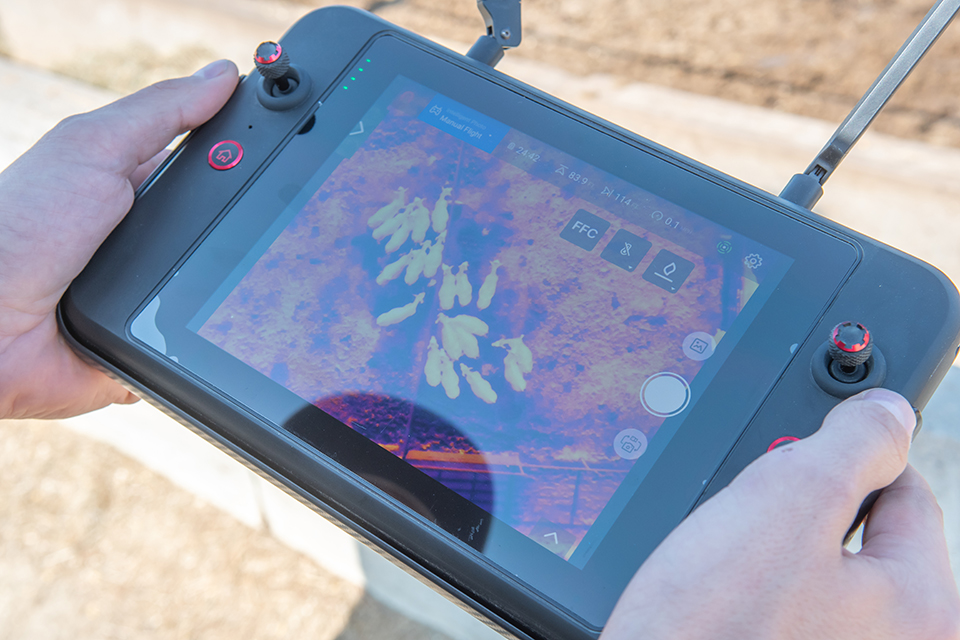
“Normally, as animal scientists, we focus on the animals themselves, and not as much on the surrounding environment,” Larson said. “But with this research, we sought to see what we could learn about animals from their environment.”
The drones record heat signatures, chemical markers and moisture contents of feedlots, particularly in areas containing fecal matter. Not only can the data gathered show ranchers where animals left samples, but it also can reveal differences in animals’ diets.
“In a feedlot, not all cattle are on the same diet,” Larson added. “Some are starting out, some are in a later finishing stage. If we were to have an aerial image that could help us detect the different areas where we should be sampling to best represent that pen mathematically, that could give us a more accurate landscape of the pen than someone who’s going in and trying to guess where to randomly pull samples.”
Drone operation
To put scientific power directly into the hands of producers, Larson turned to affordable recreational drones and commercially available software. She collaborated with Kurt Carraway, executive director of uncrewed aircraft systems at K‑State Salina, to establish an approach that makes drone technology skills easy to learn.
Larson’s team discovered that the drones showed specific spots of the pen that were cooler — and more attractive to cattle — than others featuring concrete and organic matter buildup. These popular spots had higher emissions.
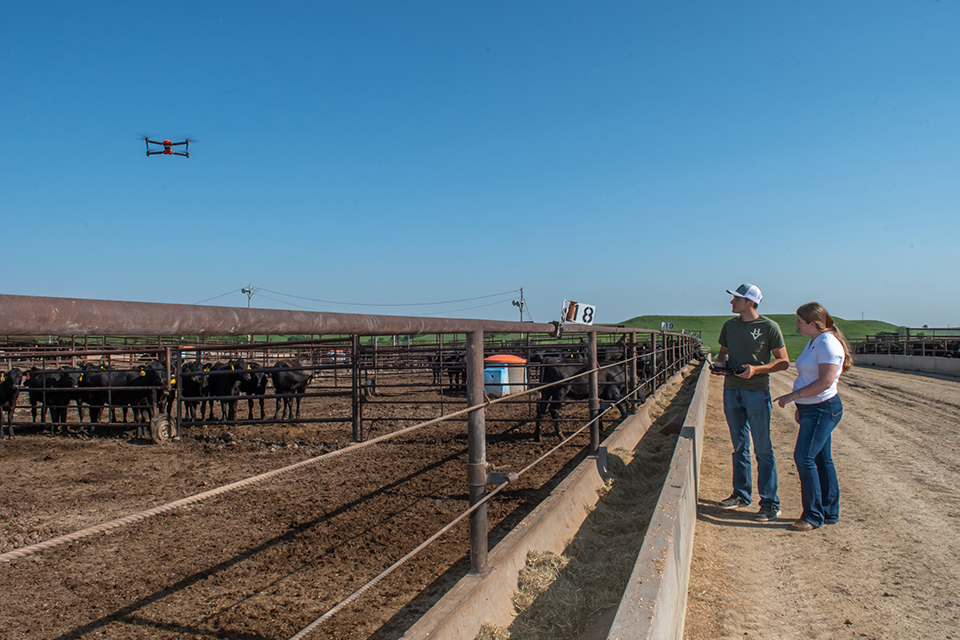
Larson’s research data helps feedlot operators maintain the best pen conditions to support cattle health while decreasing labor costs and helping the environment.
By Kate Ellwood