Veterinary students race to uncover the secrets of the dead before nature takes its course
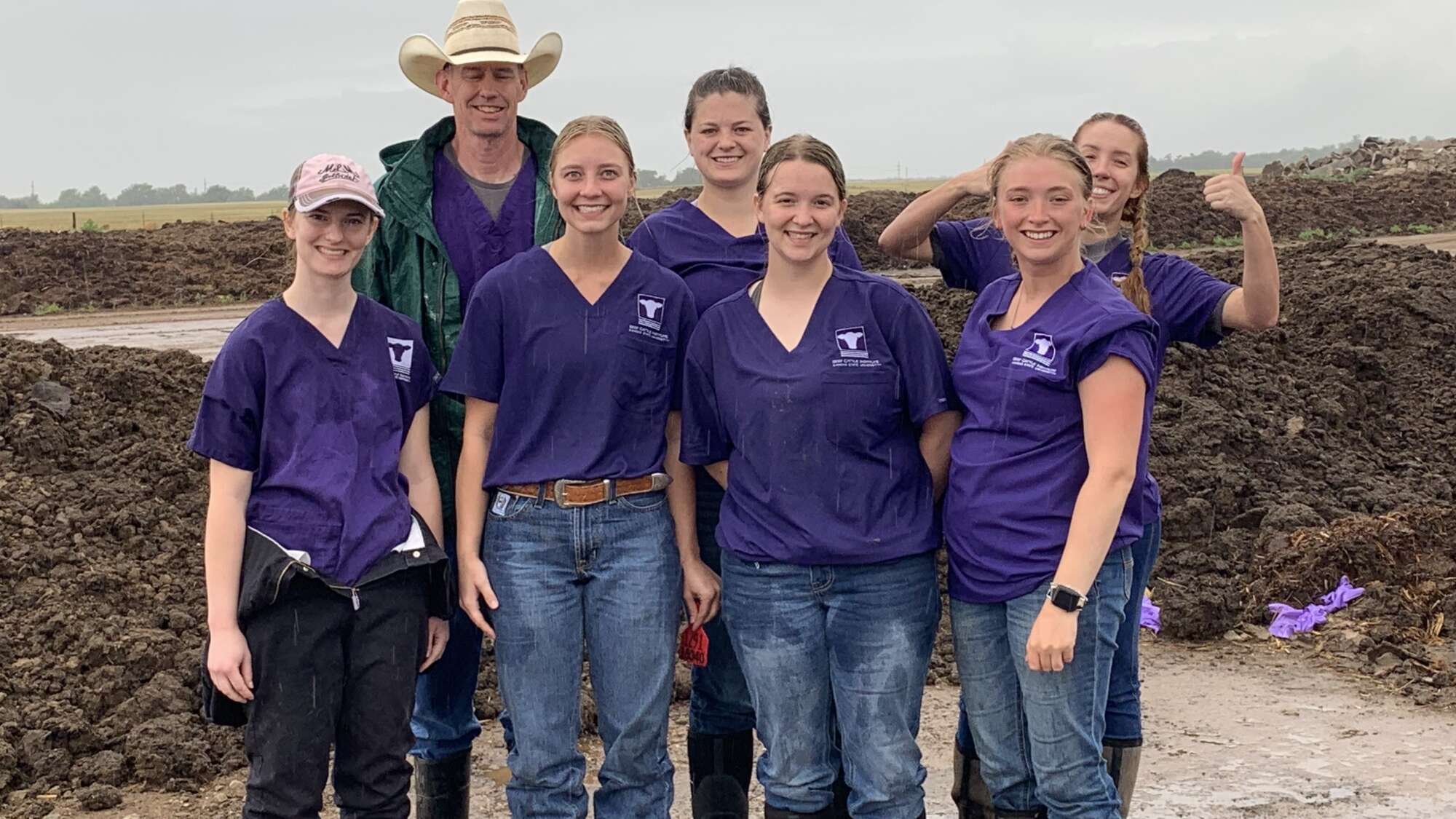
As the sun rose each morning, teams of K-State veterinary and graduate students were already on their way to uncover that day’s medical mysteries at feedlots in Kansas, Oklahoma and Texas.
As part of an ongoing research grant at K-State’s Beef Cattle Institute, each student carried out a research project, gathering data through necropsies (animal autopsies) on feedlot cattle. The details they collected didn’t just lead to better understanding of cattle mortality; it informed the beef industry, leading to healthier herds.
“The faculty advisors threw this huge manual at us at the beginning of the summer — thousands of pages of pictures — and said, ‘if you see it, you’ll know how to diagnose it’,” said Alexis Hansen, second-year veterinary student.
At the beginning of the summer, a typical necropsy could take an hour. But through practice and repetition, the students slashed that time to just minutes. Their growing expertise led to valuable information that would help the rest of the herd stay healthy.
Growing confidence
Beyond hands-on experience, students get a taste of what their future holds while helping to drive decisions that shape our nation’s food supply.
“We do get some hands-on experience in the clinic, but it’s limited,” said Lauren Wheeler, a second-year vet student. “Getting this much hands-on experience and being able to get proficient at cutting and diagnosing is extremely important. It gives you a leg up.”
Wheeler’s coworkers agree — a summer job doesn’t get any more real than this.
“The cadavers we’ve worked on in class aren’t 100% representative of a recently deceased animal, so it was a great way of putting to test what we know in a more realistic practice setting,” said second-year vet student Eric Lorenz. “And it was a great jump start into pathology where we gather information from the necropsy and formulate that into our diagnosis.”
After the daily dash to perform necropsies was complete, the students would upload case photos and talk through diagnoses with faculty members, an experience few veterinary students receive so early in their training.
Building bridges
The work these students perform not only improves their skills; it also directly supports the cattle industry by addressing producer-driven questions and helping shape more sustainable food systems.
“Mortalities are one of the biggest costs for feedlots,” explained Dr. Brad White, director of the Beef Cattle Institute. “Understanding why cattle died and putting them into categories helps us better understand how to prevent disease and effectively treat sick cattle.”
The research helps feedlot managers fix the problem by identifying if the cattle death was due to something contagious, nutritional or management related.
To pass along their findings, students presented to a diverse audience of cowboys, feedlot managers, veterinarians and company owners.
“Knowing how to tailor your presentation to an audience that has different levels of education and understanding is an important learning experience,” Lorenz said.
And their presentations to stakeholders with different types of expertise helped spur change in some situations.
“After our presentations, one feedyard owner pounded the table and said, ‘We’ve got to figure this out’,” White said.
In just eight weeks, these students experienced the complete land-grant mission — teaching, research, outreach and service — and set themselves on the path of career success.
“It’s surreal to think we’re going to be doctors making those decisions,” Wheeler said. “But this gave us the beginning of what that really feels like.”
Support research at the Beef Cattle Institute Donation · Kansas State University · GiveCampus
Funding for the students and their feedlot research for the Beef Cattle Institute was provided by Foundation for Food and Agricultural Research ICASA, collaborating feedyards, and Legacy Animal Nutrition.