K-State professor turns leaves, petals and windfallen wood into dyes that color her sustainable textile creations
In a half-acre meadow of native prairie north of the Marianna Kistler Beach Museum of Art, a garden of dyes flourishes and blossoms. Most of us would look at the garden and see leaves and petals, but Sherry Haar, an award-winning professor in K-State’s School of Consumer Sciences, sees ingredients in her artistic recipe.
Haar uses plants and grasses to create her own natural dyes and uses them to color pieces showcasing sustainable practices. She takes care of the plants she harvests from and makes sure to leave the ecosystem intact.
“I practice and teach responsible harvesting, such as taking sparingly from abundant plants, spreading my gatherings across sites, trimming just above a growth stem, leaving root systems intact, respecting and not disturbing pollinating insects, and leaving no trace,” Haar said. “If I know that I will need a lot of a certain plant, I will cultivate it in my garden.”
The materials
Different plants yield different colors, textures and smells. Mint smells the best, marigold is pungent, weld smells like asparagus and indigo is musty.
Dye materials typically grow in most unmowed areas. Haar collects daisy fleabane, brown and black-eyed Susans, and plains coreopsis, her favorite. She also acquires windfallen materials, like Osage orange tree wood that had been struck by lightning. Its chips created intense shades of golden yellow, one of Haar’s favorite color collections.
The process
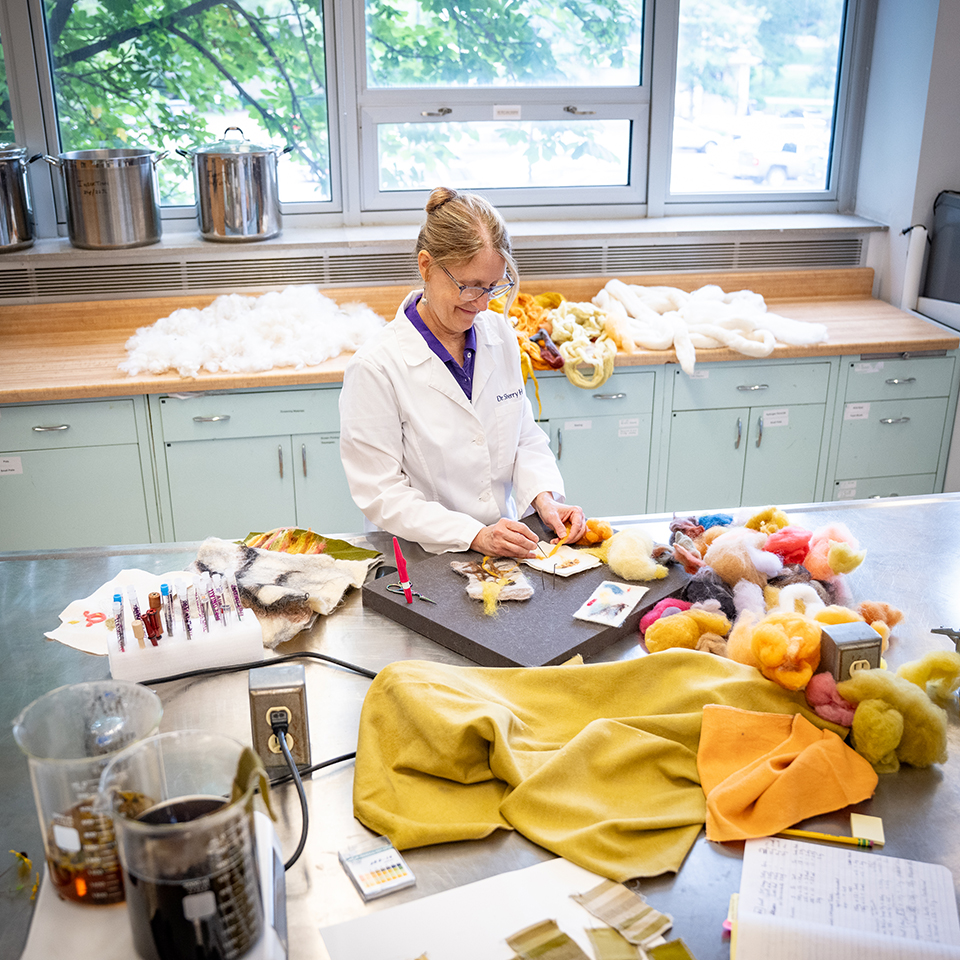
Haar creates her products either at the natural dye lab in Justin Hall or her own home.
“I love the flexibility of where to work with natural dyes,” she said. “In the natural dye lab, I use electrical heat, large stock pots and beakers. At home, I use solar heat and a range of containers, like jars, bags and recycled containers, on my driveway. When I need quick or more control of the heat, I use a solar oven.”
The result
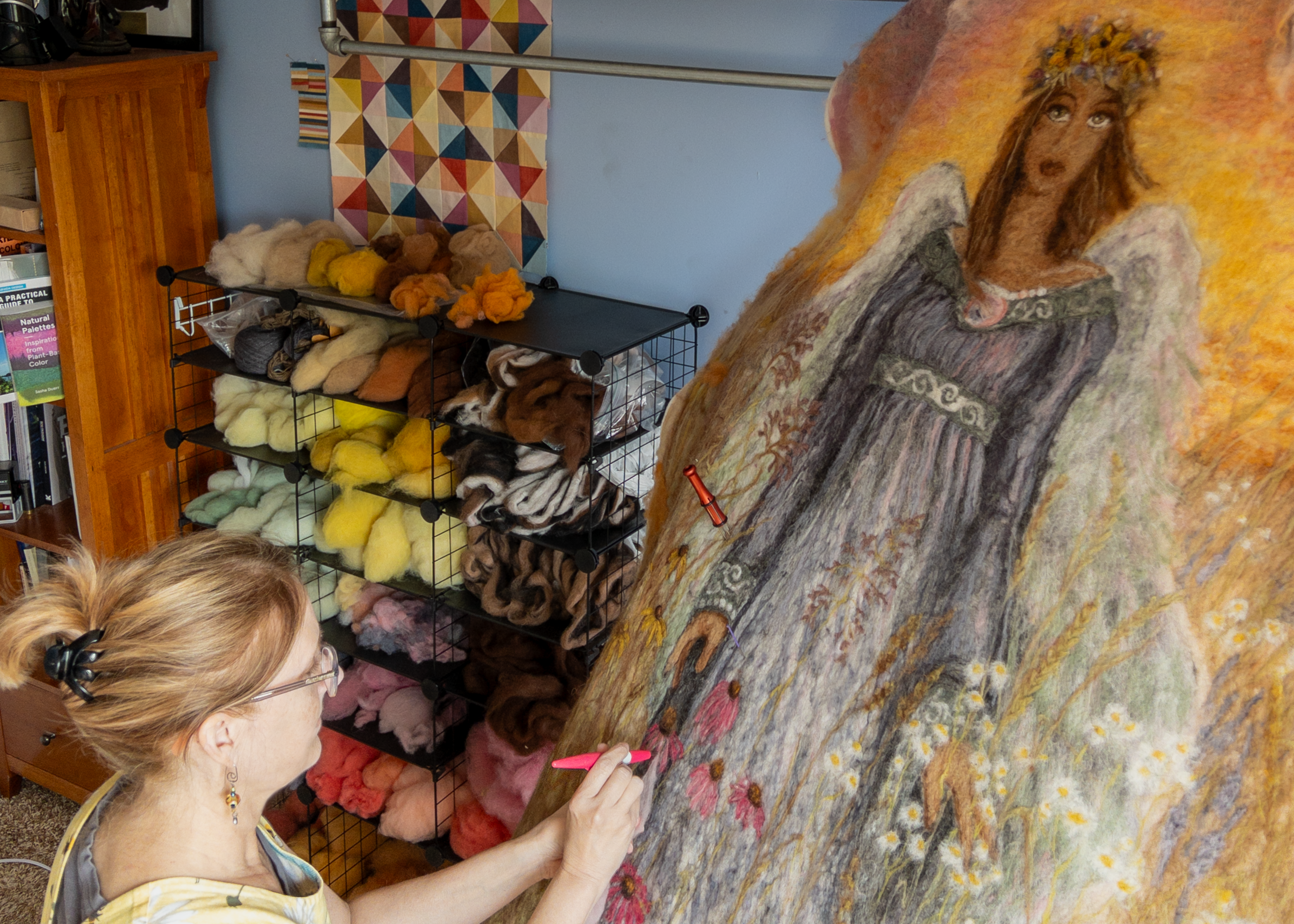
Haar uses her biodegradable natural dyes and fiber from Kansas alpacas — she also uses cotton, silk, hemp and wool — to create decomposable textile art pieces such as burial cloaks, quilts and coffin covers. With these projects, she hopes to spark conversation about sustainable end-of-life fashion and green burials.
“Clothing and textiles are integral to daily life, yet the fashion industry is a major contributor to overconsumption, waste and pollution,” Haar said. “While the circular economy seeks to address these issues by preserving product value and regenerating nature, the end-of-life phase of textiles and the human body — specifically in burial — is often overlooked.”
What are green burials?
Also known as natural burials, green burials help restore and preserve the environment. Green burials involve wrapping or clothing the body with biodegradable textiles that will return nutrients to the soil.
Haar teaches fashion design and leads research projects that explore plant dyes. Her students can collaborate globally with a women’s cooperative in Guatemala to further their education in natural dyeing.
“As our university builds on its land-grant roots, naturally dyed green burial fiber art exemplifies how creative scholarship can honor the beauty and resourcefulness of the tall grass prairie while caring for its people,” Haar said.
By Kate Ellwood