K-State veterinary students sharpen skills by caring for horses in need
What started out as one woman’s simple mission to help a horse in need turned into a full-fledged equine sanctuary in the Flint Hills — and a welcomed learning facility for K-State.
Karen Everheart’s Rainbow Meadows Equine Rescue and Retirement is the happy result of her lifelong love for horses.
When she was approaching retirement and looking for land, she learned about an unfortunate pony with overgrown hooves. She rescued him and began sheltering one or two needy horses per year. Word of her efforts spread, and business blossomed.
Rainbow Meadows, located south of Junction City, has helped more than 1,000 horses. With upwards of 50 horses living at the rescue, Everheart and her team can use all the help they can get.
Equine education
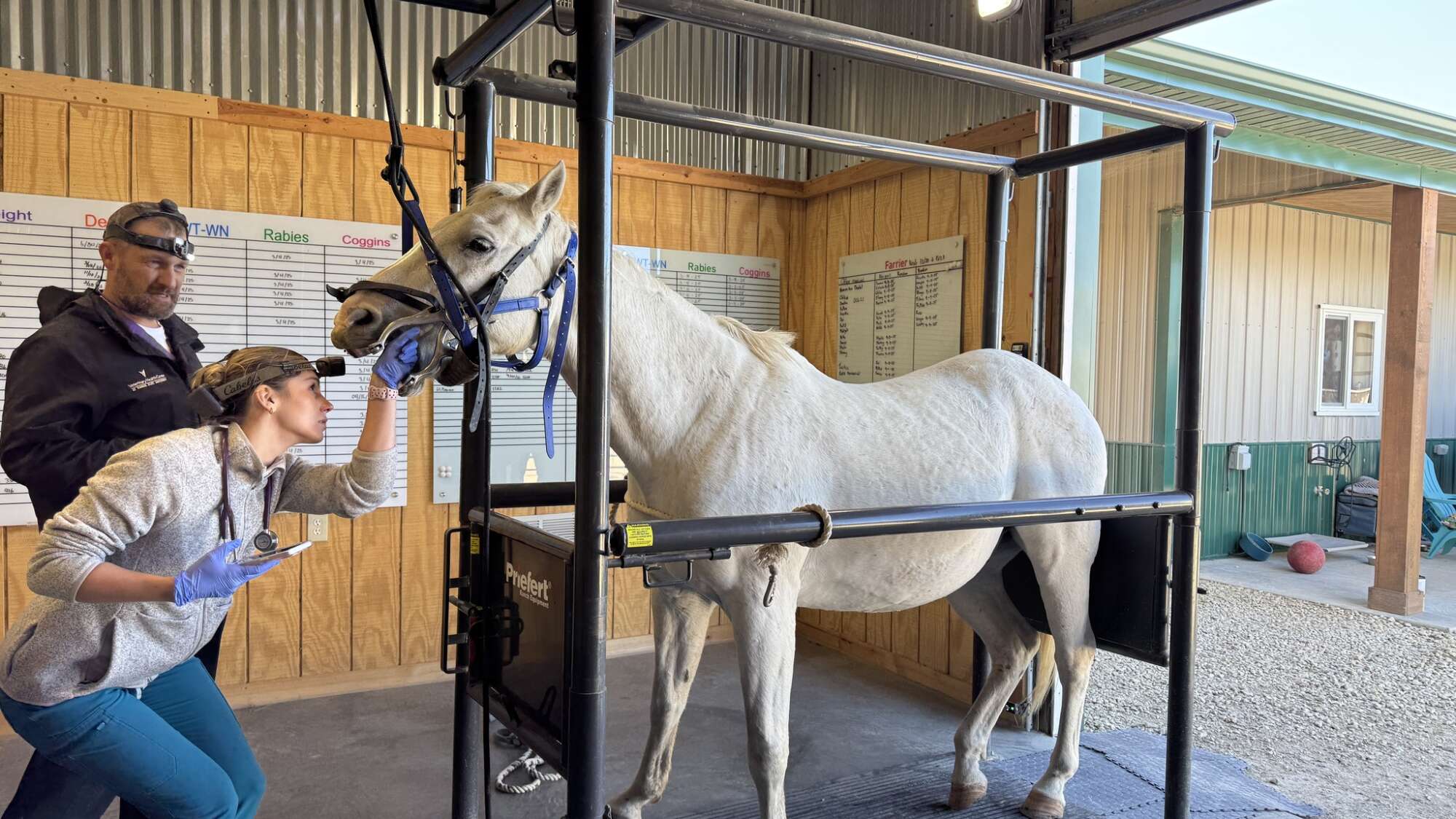
Rainbow Meadows’ proximity to K-State’s Veterinary Health Center creates a win-win situation. Fourth-year students get to practice equine care skills while giving horses and the rescue the help they need.
Everhart said the rescue has relied heavily on K‑State, and she enjoys having students involved — not only so they can gain hands-on experience, but also so she can spread awareness about animal welfare.
“When I have 40 to 50-plus horses here at any given time, students are able to see different breeds, situations, physical conditions and needs than they might otherwise see on a field call,” she said. “I think it is really important to be able to have these students come here and see a model for a good rescue.”
Chris Blevins, clinical professor in equine field services, shared Everhart’s sentiment.
“The number of oral exams, lameness evaluations, general health services and treatments students are able to perform are exponential in the clinical experience,” he said. “They also get to experience a very well-run equine rescue and can take these examples and thoughts out in practice and to other rescues they may work with when they graduate.”
Student experience
Fourth-year veterinary students Marissa Komp, Meagan O’Brien and Jack McCoole found their experience at Rainbow Meadows extremely rewarding.
“This field call helped solidify my confidence in dental examinations and power floats, as well as vaccine administration, general physical assessment and in-the-field lameness examinations,” Jack says. “I also got to meet and communicate with some great people who have a true passion for horses.”
College students don’t often get to follow up on the horses they treat, but when they do, they can witness the real impact of their efforts.
“During Que Sera Sera’s stay at VHC, I was the student in charge of her case,” Meagan said. “It can be difficult to follow cases all the way through as a student, because often, by the time they’re ready for a follow-up appointment, we’ve already moved to a different rotation. It was a wonderful opportunity to see her case through, from her presentation to the clinic to her staple removal and first recheck!”
Any hands-on veterinary experience, regardless of whether it aligns with a student’s specific area of interest, helps create more well-rounded veterinarians.
“Although I don’t plan on working with horses in my early veterinary career, I find working with them very invaluable in learning about animal behavior and husbandry,” Marissa said. “I’ve become a more confident veterinary student through my equine rotation, have learned more about horses than I ever thought I would and have enjoyed every minute of it!”
Support the equine field service
To support Blevins’ work, the equine field service at the VHC or the fourth-year DVM students, contact the development office at 785-775-2137.
By Kate Ellwood
Curated from A passion to save horses creates opportunities for education