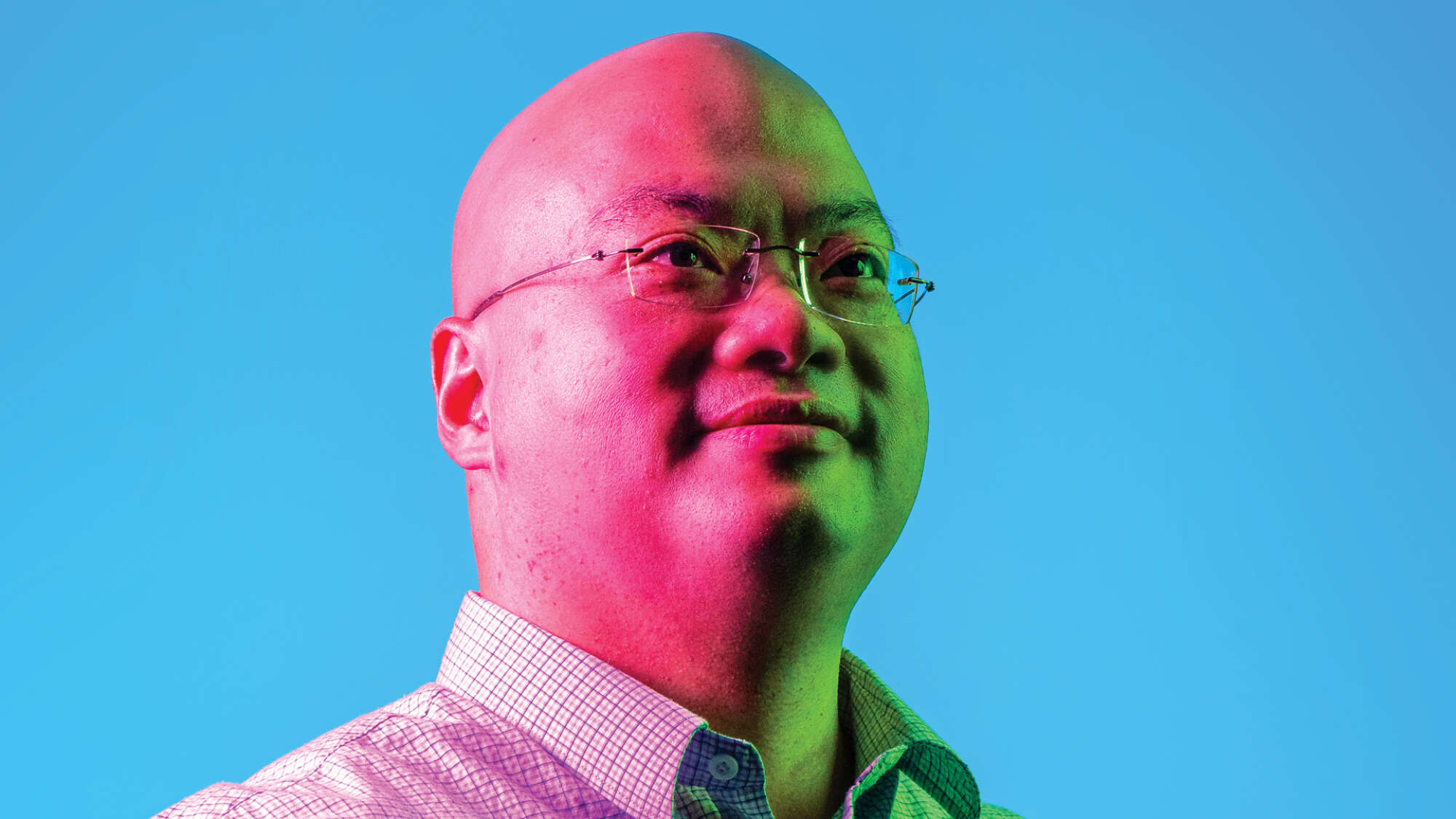
Hongyu Wu
University Outstanding Scholar
Lucas-Rathbone Professorship in Engineering
Imagine a world where the next big blackout never comes.
Where even in the face of tornadoes, cyberattacks or surging demand from AI-powered data centers, the electricity grid hums along — reliable, resilient and ready for whatever the future brings.
That’s the vision driving Hongyu Wu, associate professor of electrical and computer engineering at K-State. Wu’s research isn’t just about wires and switches — it’s about weaving the latest technology into the very fabric of our power systems so that communities everywhere can count on the lights staying on.
A grid for the next century
“The electric grid in the U.S. is more than 100 years old,” Wu said. “There are still a lot of legacy devices out there. As we add more renewables, electric vehicles and AI infrastructures, the challenge is figuring out how to make it all work together — efficiently, reliably and securely.”
Wu’s lab is at the forefront of this transformation, developing new models, algorithms and simulation tools to help utilities and communities modernize step by step.
“Replacing the whole grid at once isn’t realistic,” he said. “But we can plan, innovate and upgrade in stages, making the system smarter and more resilient as we go.”
Defending against the unexpected
It’s not just about keeping the lights on during a sunny day. Wu’s research tackles the big threats: natural disasters, cyberattacks and the growing complexity of the grid itself.
“We’re looking at how to sustain electricity during emergencies, whether it’s a tornado or a hacker,” he explained. “And we’re working directly with communities — like tribal nations in Kansas — to design microgrids that can keep critical services running no matter what.”
Empowering communities, inspiring students
One of Wu’s proudest projects is a partnership with the Prairie Band Pottawatomie north of Topeka, funded by the National Science Foundation. The goal: energy sovereignty.
“We’re helping them use renewables and battery storage to reduce costs and become more self-sufficient,” Wu said. “If the main grid goes down, they can still power their government buildings, casino and the Boys and Girls Club.”
This work isn’t just technical — it’s deeply personal. Wu lights up when talking about his students, from undergrads to doctoral students, who are hands-on in all these projects.
“Seeing them grow, solve real problems and get recognized by the community — that’s the most rewarding part of my job,” he said. “We’re training the next generation of engineers to keep innovating and protecting our power systems.”
Wu always dreamed of being a professor and following in the footsteps of his mentors.
“Teaching, in my personal opinion, is the most important thing as a professor,” Wu declared. “As engineers, we’re problem solvers. Our job is to use every tool — AI, quantum computing, renewable energy — to make life better for everyone. And to train students who will keep revolutionizing solutions.”