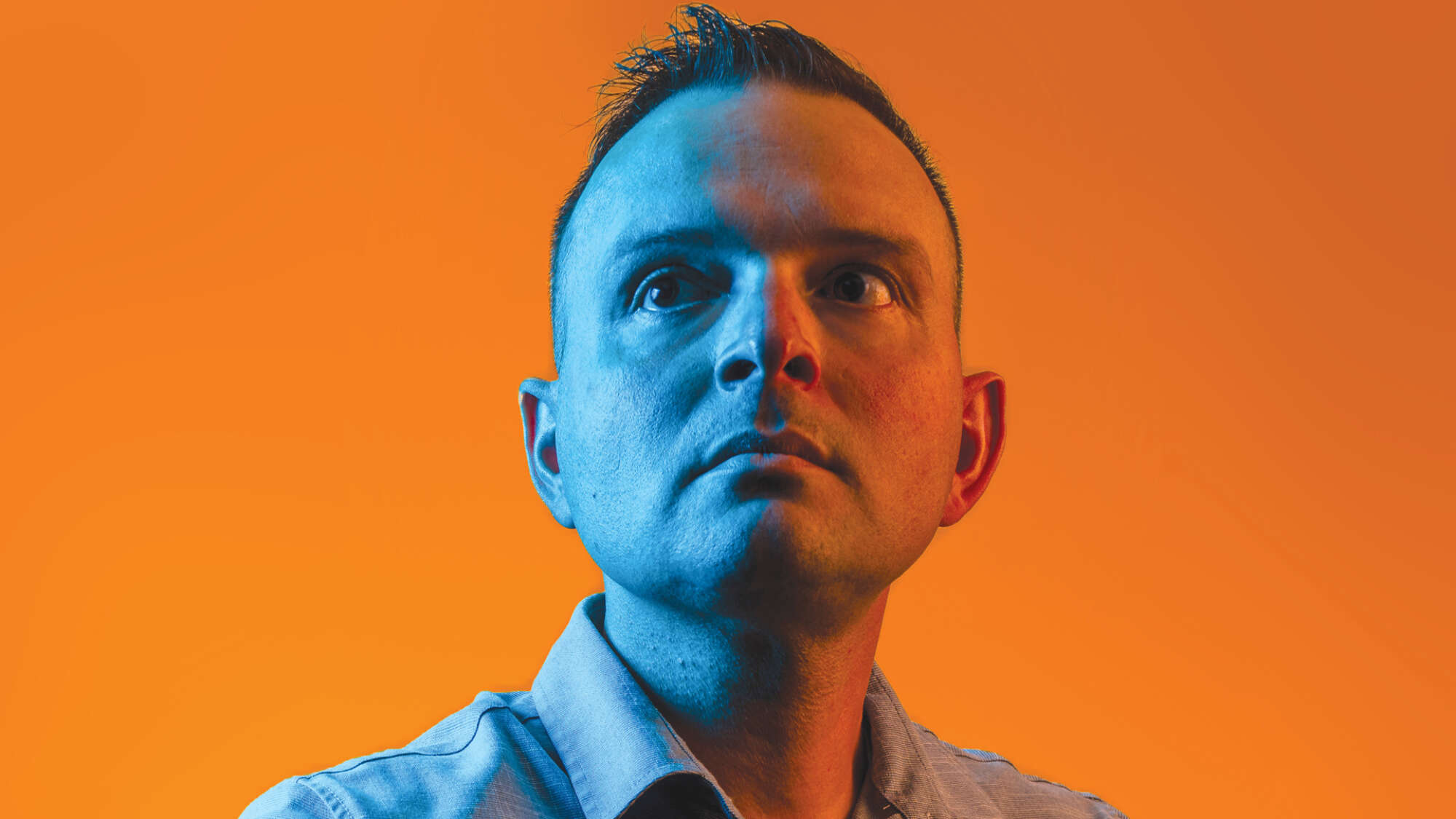
Amir Bahadori
Nuclear Engineering Program Director
Hal and Mary Siegele Professorship in Engineering
K-State’s unique nuclear engineering program tackles an insatiable hunger for energy — and a massive workforce need.
From powering space exploration to fueling artificial intelligence, nuclear power is making a comeback. And K-State is leading the way.
K-State’s nuclear research reactor, operating since 1962, is one of only about 25 research reactors in the country.
“Our students get the hands-on experience of working with an actual operating reactor,” said Amir Bahadori, director of K-State’s nuclear engineering program. “The combination of our reactor’s capabilities, students being able to use it as part of their coursework and research, coupled with our faculty who are interested in how reactors work and how we can operate them safely, makes our program unique.”
Because of a boom in students interested in studying nuclear engineering, and the need for a massive increase in the nuclear workforce (from the current 75,000 to 375,000 new workers over the next 20 years), K-State has re-launched a bachelor’s degree in nuclear engineering.
“It’s been a perfect storm of student interest, industry need and the tech sector looking toward nuclear and government all being supportive,” Bahadori said.
Fueling a need
Daily life hogs up more energy than ever — and there’s the power-guzzling drain on the grid from artificial intelligence and data centers. But nuclear energy, which previously suffered from poor public perception, is now widely recognized as a vital ingredient in providing more power.
“In order to be good stewards of the environment and to continue to increase economic opportunity, nuclear power — as a very reliable, safe, consistent baseload generation capacity — is absolutely necessary,” Bahadori explained.
Efficient and environmental
Mention “nuclear power” and disasters like Three Mile Island or Chernobyl may come to mind. But safe operations and waste storage, reliable production and newer designs make nuclear a wise energy choice today.
“Nuclear plants have a reputation for being very expensive. One of the goals of these newer nuclear companies is to make the production of nuclear plants more modular and consistent from site to site, bringing down the cost,” Bahadori said. “Nuclear plants have essentially zero emissions while operating. They do generate waste, but we have the technology now to safely deal with it.”
Bahadori explains that one of the main benefits of nuclear power is its incredibly high-energy density.
“Some of the newer reactors actually have the potential to burn more of the fuel that is currently not being used to create energy,” he explained. “And you end up with less waste.”
Radiation all around
Everyone on Earth has been exposed to some form of radiation. Think dental or medical x-rays, but also exit signs, smoke detectors and even bananas. Yes, bananas! (Natural potassium, which is an essential mineral for numerous bodily functions found in bananas and many other foods, has a radioactive isotope, potassium-40 (K-40).)
Bahadori’s latest research dives deep into the human impact. His team collaborates on the Million Person Study, which pools decades of data from about one million radiation workers to better understand the health effects of chronic exposure.
Nuclear power plant workers, medical workers and industrial radiographers (pipe and weld inspection) make up some of the largest groups he’s studying.
K-State and back
A native of Kansas City, Kansas, Bahadori grew up in a K-State family. After graduating from K-State in 2008 with degrees in mechanical engineering with a nuclear engineering option and mathematics, he continued his research into the medical side of the nuclear field. His doctoral research at the University of Florida was on protecting astronauts from radiation. This led to time at the Johnson Space Center with NASA. Then came the opportunity to return to K-State as a faculty member.
“I couldn’t pass that up!” exclaimed Bahadori. “It’s been a wonderful journey. I really enjoy interacting with the students while also getting to study things I find interesting and hopefully contribute to the body of knowledge that’s going to impact people’s lives.”
Out of this world
Bahadori states that nuclear power is here to stay — and not just on Earth.
“There’s a lot of talk about nuclear reactors on the moon or Mars to promote space exploration and provide the power needed for surface operations, or using nuclear propulsion for getting astronauts to different locations in the solar system,” he explained. “And I think we’ll continue to see a lot of innovations in the health realm.”
Whether it be for energy, space travel or human health, K-State is leading the future of nuclear power and other beneficial uses of radiation.