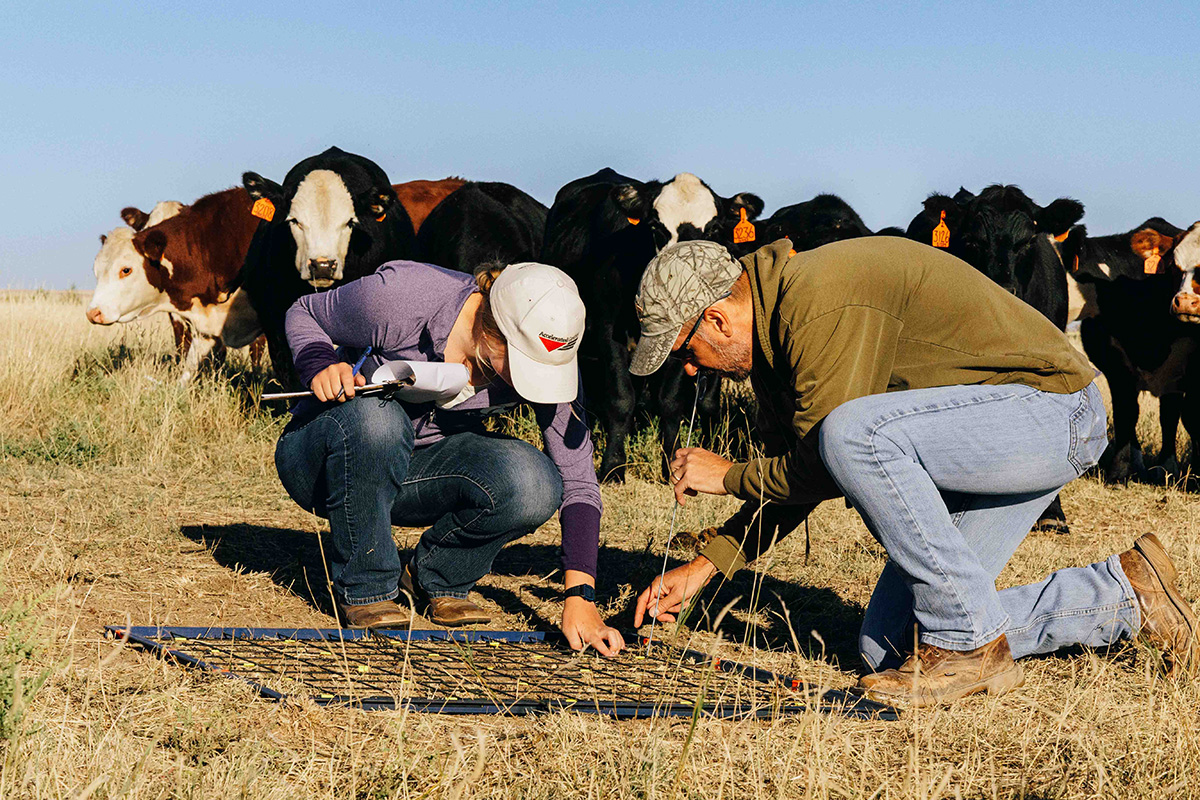
K-State research examines how leveraging cattle behavior — not chemicals — could create a double bonus for producers
Managing cattle isn’t a simple task, and it gets even more complicated when invasive grasses are thrown into the mix.
Tasha Macholan, a graduate student at K-State’s Agricultural Research Center in Hays, Kansas, is studying a new way to fight unwanted weeds while improving calf growth.
Rather than treating the pesky grasses with chemicals or attempting to burn the infested areas, Macholan is testing a less-destructive tactic.
Putting cattle to work
Toward the end of grazing season, the quality of native forage declines, which hinders cattle gains. To combat this, producers give cattle protein supplements in the form of dried distillers grains. These grains are fed to the cattle in feeding troughs or directly on the ground.
Macholan noticed that when the grains are fed on the earth, cattle tend to trample and over-graze the vegetation in that area. This has traditionally been thought of as a downside to supplementation.
But Macholan theorizes that distributing protein grains in areas infested with invasive grasses will prompt cattle to trample the unwanted vegetation, providing a safe solution that also boosts cattle nutrition.
Testing the theory
Macholan used a group of 100 calves split into trough-fed, ground-fed and control groups to accurately test her theory. The results in the ground-fed pastures showed that not only was the invasive vegetation trampled to bare soil, but the cattle also ate mature grasses they wouldn’t normally consume at that time of year in search of the grains.
Also, the cattle that received ground-fed supplements did not show any less gain than the trough-fed cattle. Though encouraged by the results, Macholan is waiting to see if the practice supports the growth of desirable grasses in future seasons before drawing broader conclusions.
Throughout the project, faculty mentors and resources at the Agricultural Research Center helped Macholan grow as a researcher, turning her interest in cattle nutrition into work that could make a difference in the field.
“It’s been awesome working out here,” she said. “The people at the center are wonderful, and the setup has been really great for me and my research.”
By Kate Ellwood
Curated from K-State graduate student explores cattle grazing as invasive grass management tool