K-State’s pragmatic second president was much more than the namesake of its most famous building.
Ask any K-Stater what the university’s flagship building is, and they’re sure to respond with “Anderson Hall.”
Maybe they’ll say it houses the president’s office. Maybe they remember it as the place students went to enroll. But all Wildcats know Anderson Hall and Kansas State University come as a pair.
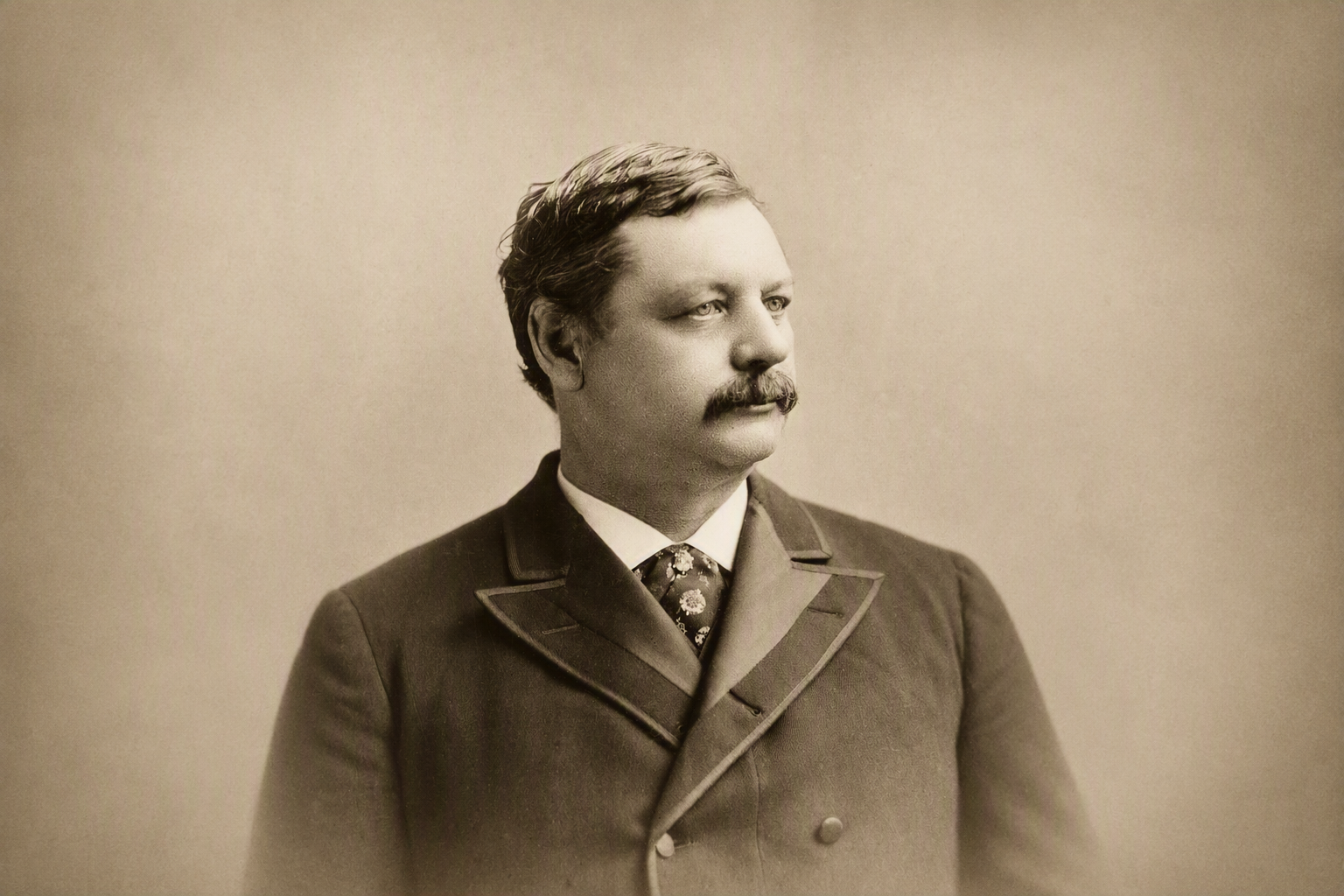
What about the man behind its name? What do we know about John Alexander Anderson?
From preaching to teaching
Before he became the second president of Kansas State University (then Kansas State Agricultural College) in 1873, John A. Anderson served as pastor of First Presbyterian Church in Junction City, Kansas. The Kansas Board of Regents acknowledged he had “no practical or theoretical knowledge of agriculture” and no experience as a teacher, yet noted “his vigorous, pushing, talented” nature and “quick comprehension of men and things.”
The regents selected Anderson, a persuasive communicator with a reputation for practicality and traditional values, to replace outgoing president Joseph Denison. There was disagreement over the role of land-grant universities as defined in the Morrill Act at that time, and Anderson quickly made his interpretation of the legislation known.
Under his leadership, K-State would prioritize a back-to-basics curriculum: farming, blacksmithing, woodworking and stonecutting for men. Classes for women would enhance domestic skills — or at least not compete with them — and consisted of dressmaking, printing, telegraphy and instrumental music.
Latin, German and French were declared optional, leaving English the only modern language requirement.
Still, the biggest transformation was likely his controversial decision to shorten degree programs from six years to four. It was said to have caused decades-long damage to K-State’s academic standing throughout higher education, but time was on the side of Anderson’s utilitarian reasoning. He wrote that reducing the course of study to four years “brings an agricultural education still closer to the people, and places it yet more surely within the reach of those boys who have to earn their way by the labor of their hands.”
Students of his day remembered him as an approachable leader who pared the school’s 10-rule code of conduct down to only two simple directives: Behave properly and attend to your own business courteously or leave. (Practical, remember?)
The man behind the move
Anderson was intent on building K-State’s ability to deliver a state-of-the-art industrial and agricultural education, but its facilities were lacking. While many K-Staters know the original home of the university was located northwest of the current Manhattan campus, fewer are aware that Anderson hastened the move closer to town and set the stage for growth.
An appropriation from the legislature in 1875 facilitated the renovation of a sturdy barn on the new site, establishing Industrial Hall. The blacksmith shop at the former site was transferred soon after. That summer more classes were introduced on the new campus, and the state was convinced in 1876 to pitch in for the construction of a horticulture building and chemical laboratory.
He was instrumental in driving big progress for K-State facilities, but Anderson objected to any aspirations of campus grandeur. He was quoted as saying that K-State should feature “cheap, stone buildings, one or two stories, scattered among the trees” to serve as “a little hamlet of thriving artisans built in the heart of rich and well-tilled fields.”
Ironically, the first wing of what would become the university’s grandest building to date was completed during his term, and in 1902, the Practical Agriculture Building was renamed Anderson Hall in his honor.
All the news that’s fit to lead
The Industrialist, K-State’s first newspaper, was also a product of Anderson’s. A member of the Kansas Editorial Society, the president often contributed to the publication, which was distributed to papers statewide and expanded his influence.
When he was nominated to represent the state’s first congressional district in 1878, he won in a landslide. Anderson left the presidency to serve in his new national role, and in 1891 he was appointed U.S. consul general to Egypt. His health deteriorated after arriving in Egypt, and Anderson died in Liverpool, England, on his way back to the States the following year. He’s buried in Junction City’s Highland Cemetery, which he founded during his years as a pastor.
Anderson Hall is at a critical junction
Anderson Hall is in urgent need of $42 million-worth of repairs, and it will take the commitment of K-Staters everywhere to get it done.
But there’s good news! The project is eligible for matching state funds through the 2024 Campus Restoration Act if we act by June 2027, putting success within reach for much less.
Learn more