How did Erasmus T. Carr go from building prisons to becoming the supervising architect for one of Kansas’ best-designed buildings?
As most kids do, Carr spent his childhood years learning bricklaying and carpentry in his time away from school. He began his career as a builder in Syracuse but quickly caught some frontier fever, drawing him to Leavenworth to start his architectural shop.
Before his work on the iconic Anderson Hall, Carr made a name for himself designing the Kansas State Penitentiary. This established him as one of the state’s most successful post-Civil War architects. He then won national recognition for designing the Kansas exhibit at the 1876 Centennial Exposition in Philadelphia, which depicted Kansas’ agricultural and industrial progress and was widely considered one of the best state showcases of the event.
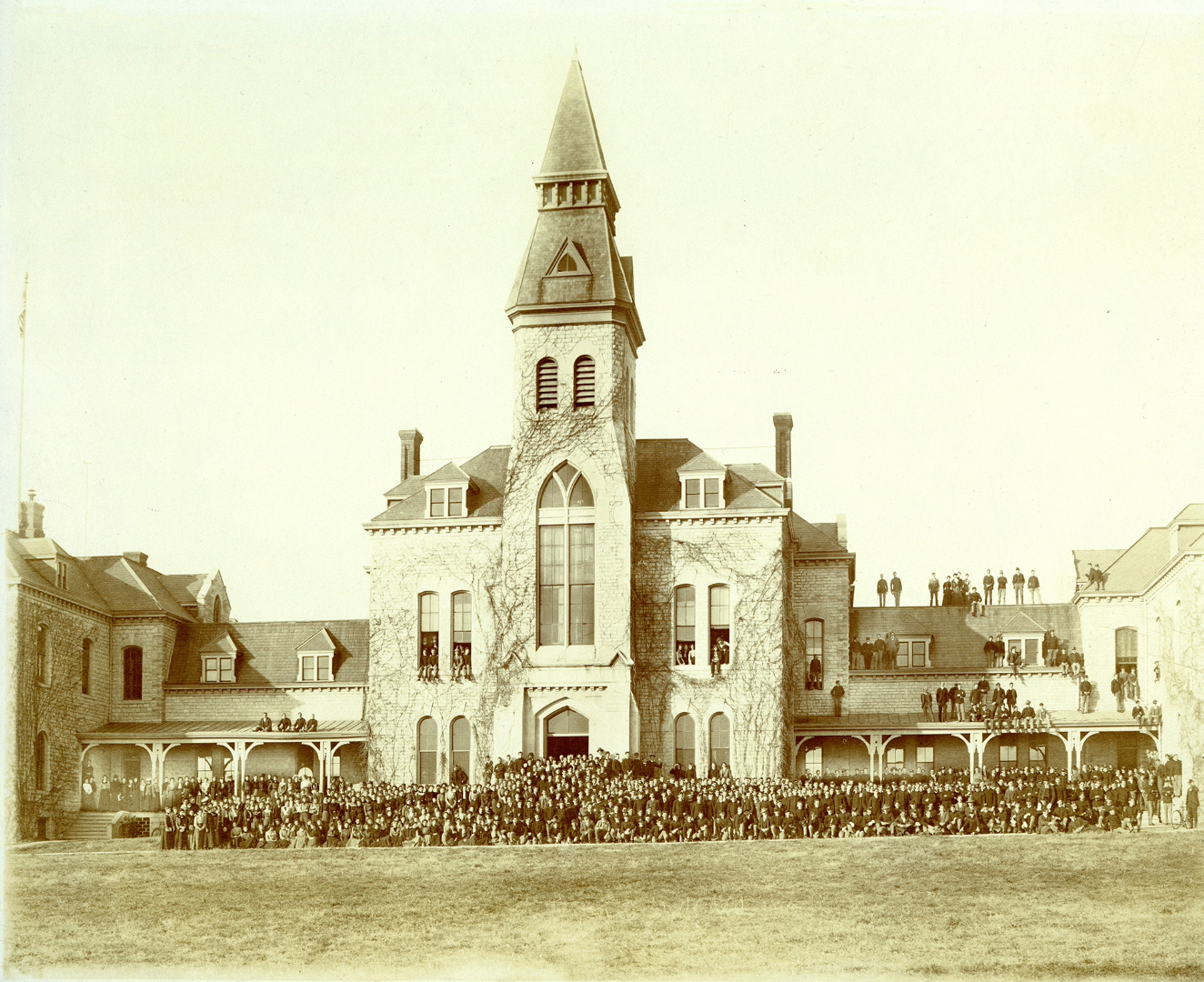
This newfound notoriety served as an important stepping stone for Carr on the path to becoming the supervising architect for Anderson Hall. The Kansas State Agricultural College Board of Regents took notice and commissioned him to design the project in 1877. In addition to the president’s office and classrooms, his original design included a chapel, reception area, library, ladies’ study room, model kitchen, sewing room and more.
Anderson Hall has since been renovated numerous times for different uses and upgrades. It’s housed everything from a dental office to a canteen and just about everything in between. So really a better question is, what hasn’t been in Anderson Hall? K-State isn’t done yet, as they are continuously restoring Anderson to preserve its beauty.
Even after all these years and countless remodels, Anderson is still a charm. In 1993, Kansas architects recognized Anderson Hall in The Topeka Capital-Journal as one of the state’s best-designed buildings.
When Carr passed away, he’d amassed an amazing track record. Four other buildings he designed over the course of his career have joined Anderson on the national register.