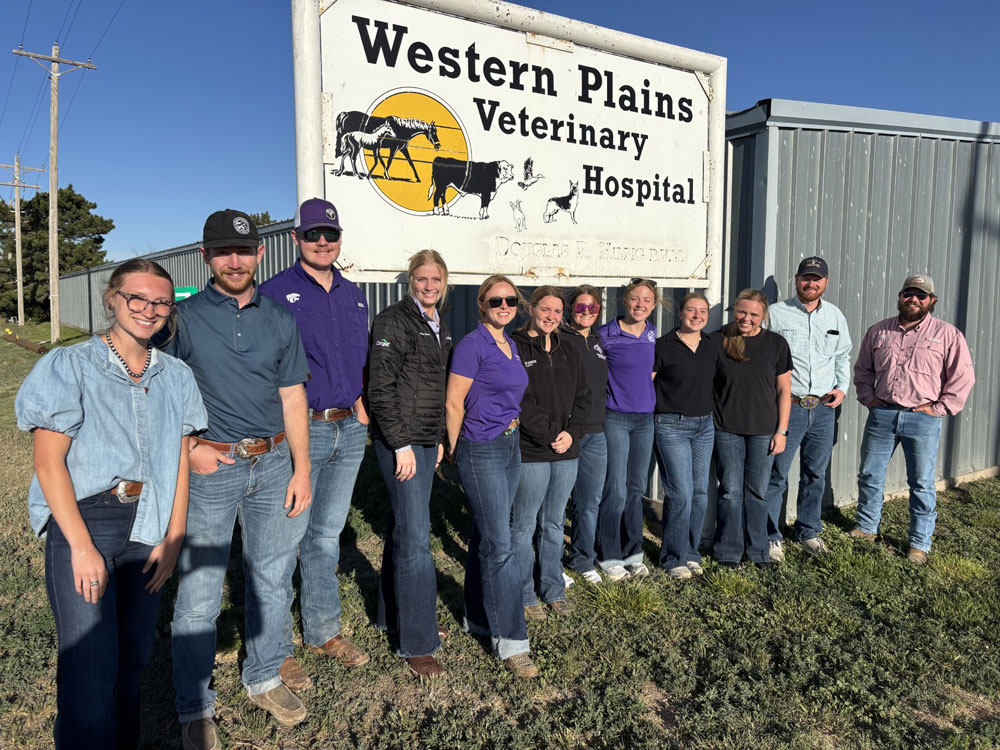
College of Veterinary Medicine students see firsthand what it takes to be a rural vet.
A recent survey of more than 200 Kansas livestock producers revealed a concerning trend — nearly 60% believe there’s a shortage of veterinarians in the state.
The Veterinary Training Program for Rural Kansas provides a financial incentive for recent veterinary medicine graduates to bring their practices to rural Kansas communities.
Seeing opportunities up close
Eleven scholars recently took a trip to explore veterinary practices in southwest Kansas and see some of these unique opportunities for themselves.
The seven-stop trip exposed students to a variety of veterinary fields like mixed animal practices, feedlot consulting and, of course, veterinary medicine in rural communities. Every Kansas town they visited guided students toward a new potential career pathway.
For third-year VTPRK scholar and College of Veterinary Medicine student Todd Paisley, the trip opened his eyes to new fields he had never considered.
“The trip revealed to me new areas of veterinary medicine like the industry of feedlot consulting,” he said. “The trip inspired me to pursue a feedlot consulting internship this summer and connected me to individuals throughout the industry.”
Rural connection
Once scholars complete their doctorate in veterinary medicine, they are required to practice in one of 92 different Kansas counties with a population under 40,000. Over the course of their three-day trip, students saw for themselves there is no shortage of opportunities in these rural communities.
Several K-State graduates were among the industry professionals welcoming students by sharing their experiences. Industry professionals were happy to share their experiences with students who are willing to learn.
“Students who have been awarded the VTPRK scholarship are enthusiastic to gain skills they will need to thrive in rural veterinary practice,” Dr. Bob Larson, professor in production medicine, said. “The veterinarians and livestock producers they met on the tour were eager to share their experiences and perspectives to support these students’ career journey.”
Students receive $25,000 a year in loan forgiveness over four years as long as they work in a qualifying practice. Thanks to the scholarship, these future vets will play a pivotal role in helping rural Kansas thrive.
By Will Hudelson
Curated from VTPRK scholars tour veterinary practices and livestock facilities in rural Kansas