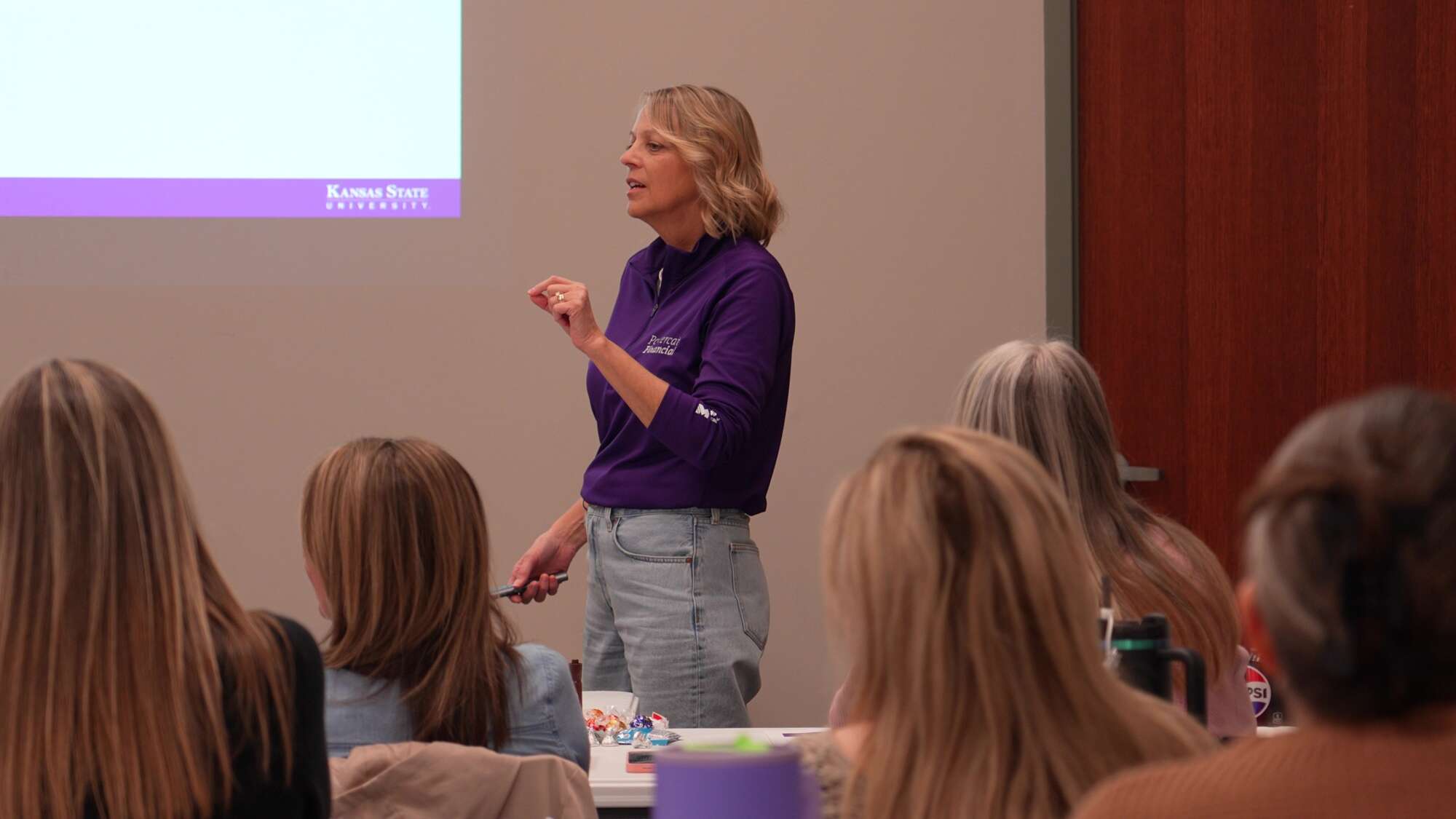
K-State helps Kansas high schools take on new financial literacy graduation requirements
Budgeting and money management aren’t just good life skills. Beginning with the class of 2028, Kansas high school students need to know them to graduate.
K-State’s Institute for Financial Education and Prosperity is stepping up to help schools meet the new financial literacy requirement — and supporting a more prosperous financial future for Kansans in the process.
With implementation in high school classrooms starting in the fall of 2026, K-State experts created a “curriculum-in-a-box” resource with ready-to-use materials for teachers. Through professional development workshops and partnerships with the Kansas Council on Economic Education and Jobs for America’s Graduates-Kansas (JAG-K), IFEP provided financial education training to 261 educators and career specialists across Kansas.
Martin Seay, IFEP director, wants to see the new requirement blossom into something bigger for Kansas.
“Our work has been trying to get a base level of preparation, and we have an opportunity to not just be the base, but to bring excellence in personal financial education,” he said. “We want to move beyond the base curriculum to creating a thriving ecosystem across the state.”
For Glenda Eichman, Powercat Financial associate director and a former teacher, the new requirement is an important step toward preparing students for everyday financial decisions.
“After spending 30 years in a high school classroom, I know how important it is for students to connect what they learn in school to the decisions they will face in everyday life. Personal finance is something every student will need, regardless of the career path they choose.” Eichman said. “Through our work at K-State, we have an opportunity to help teachers prepare students to make informed financial decisions as they transition into adulthood.”
These high school students are getting a jumpstart on practical topics like budgeting, saving, investing, credit and debt management.
K-State’s personal financial planning program, ranked number one nationally by Wealth Management, has been teaching these concepts long before the requirement was implemented. These strengths put K-State in a unique position to support Kansas in creating a strong financial literacy foundation.
“As we went into this state mandate, it was a natural extension of the strengths we have on campus and the assets we have to deploy,” Seay said. “Our job is to serve Kansans, and this is a clear place where the state has said financial literacy is a priority, and we have assets and strengths to support it.”
By Will Hudelson