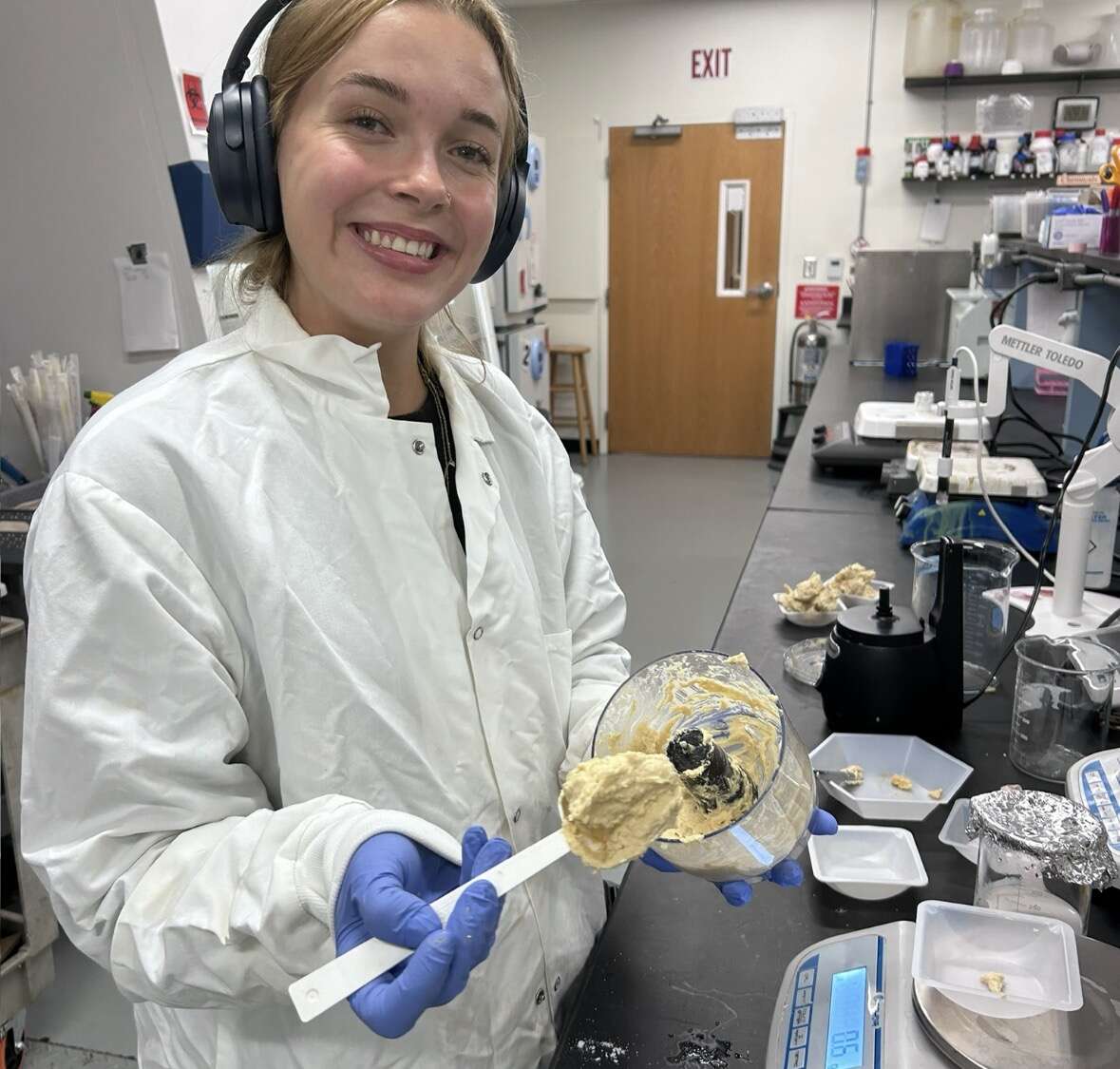
A K-State student aims to fight food insecurity with sorghum hummus
In many countries outside the U.S., sorghum is a common crop grown for human consumption and a staple food product in most households. At K-State, graduate student Madeleine Pike is exploring ways to transform this resilient grain into a nutritious, shelf-stable food.
“Sorghum is a very drought-resistant crop,” Pike said. “As climates continuously become hotter and rainfall occurs less frequently, sorghum is a promising crop for many food-insecure communities. Through my research, I’m trying to use this crop to create a value-added product to feed more hungry people.”
Pike’s work focuses on sorghum hummus, developed through a collaboration between K-State Food Safety and Public Health Lab Director Valentina Trinetta, USDA’s Agricultural Research Service and a professor from the University of Qatar. Pike and students in Qatar help advance the project by studying the nutritional value of different sorghum varieties, evaluating shelf life and ensuring the product meets food safety standards.
“I’ve made sorghum hummus with a food processor and tested it to ensure it meets microbiological safety criteria,” Pike said. “I’ve also conducted research on how foodborne pathogens behave in the hummus and experimented with additives to increase the shelf life of the product.”
A unique take on a familiar food
Traditional hummus is made from smoothly blended chickpeas. Sorghum hummus, while slightly coarser, offers its own nutritional advantages, particularly when red sorghum is used.
“Red sorghum contains tannins, which have antimicrobial properties,” Pike said. “These compounds may help reduce bacterial growth and have potential benefits for managing chronic conditions like diabetes.”
An ideal crop
Sorghum’s low water and maintenance requirements also make it a cost-effective crop to grow, especially in arid regions. For countries facing food insecurity, increasing sorghum production could help address this challenge while creating jobs and encouraging trade with neighboring sorghum-producing countries.
“My goal is to try and make an impact on the food industry by helping people get access to safe food,” Pike said. “Researching sorghum hummus and creating value-added products using sorghum has been a great way to start working toward that goal.”
By Kate Ellwood