College of Education students explore classrooms beyond Kansas
K-State College of Education students trekked through the Costa Rican rainforest every morning to reach two rural schools on their study abroad trip.
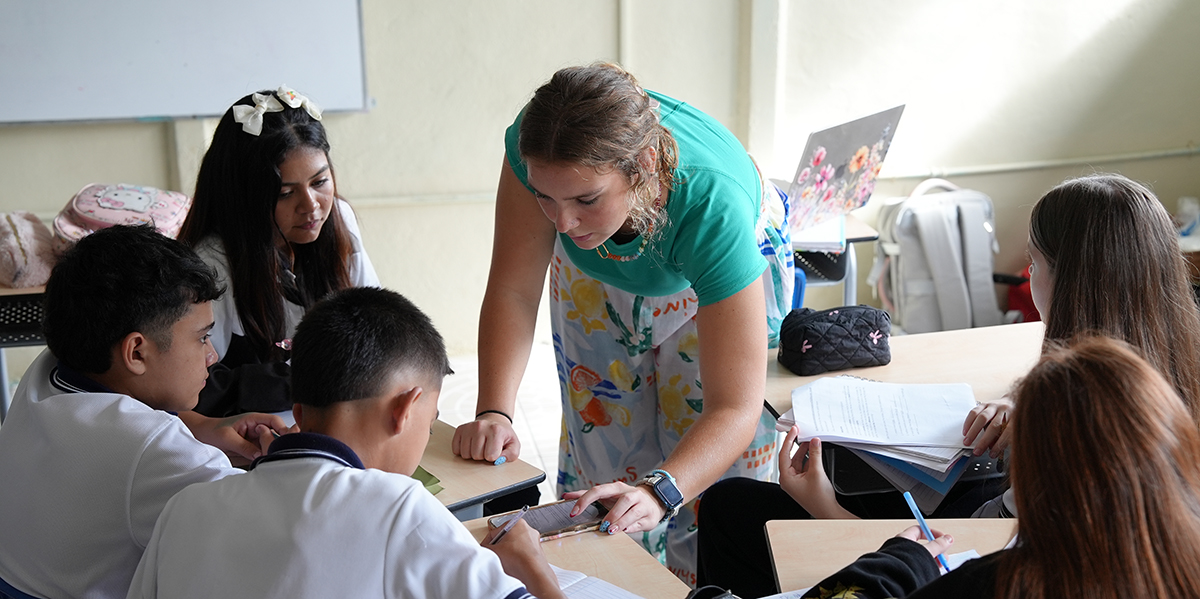
The K-Staters took advantage of the opportunity to teach students in the local schools and explore the educational differences of Costa Rica.
Although the K-State students felt far from home, they gained a new perspective on education outside of Kansas. The two schools they worked in had one classroom each: one for kindergarten through sixth grade, and one for secondary school students.
Not only were there physical differences, but students and professors also picked up on differences in Costa Rican teaching styles and strategies.
Connection in the classroom
Although the language barrier raised some difficulties for the K-State students, they still planned and taught their own lessons with a little help from Google Translate. They faced the same challenge the Costa Rican teacher battles every day: differentiating lessons between grade levels in a single-classroom setting.
Kerston Sipes, senior in education studies, admired their teaching styles and the students’ attitudes toward learning.
“The students in Costa Rica were so excited to come to school and eager to learn,” she said. “We started to appreciate the differences in how they teach. The U.S. really focuses on curriculum, which their schools also do, but maybe with a bigger focus on also being a good citizen and human in their communities.”
Joy in the classroom
K-State students used interactive teaching methods in their lessons to reinvigorate learning for both the students and the sole English teacher in the secondary school. Shabina Kavimandan, assistant professor of curriculum and instruction at K-State Olathe, noticed the connection between student and teacher remains the same despite barriers.
“A child’s smile happens when learning makes sense to them, regardless of the language they speak,” she said. “Both students’ and teachers’ hearts and minds open when there is a connection. Yes, language can be a barrier, but we can overcome that. Students saw firsthand that there are tools available they can use as they work with their own multilingual learners, and that gives them an entryway and example they can use for the rest of their careers.”
Students saw firsthand how joy can be brought to the classroom with their hard work. They’re bringing home a newfound appreciation for education around the world and even a few ways to improve Kansas classrooms.
By Will Hudelson
Curated from Costa Rica study abroad gives College of Education students global perspective