From concept to closet, students bring sustainability to every step of the fashion process.
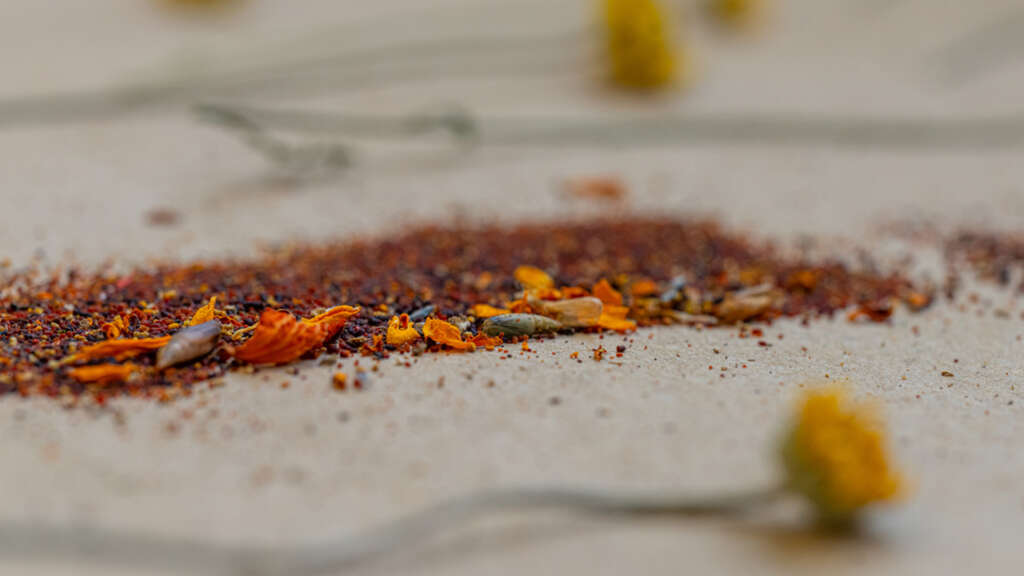
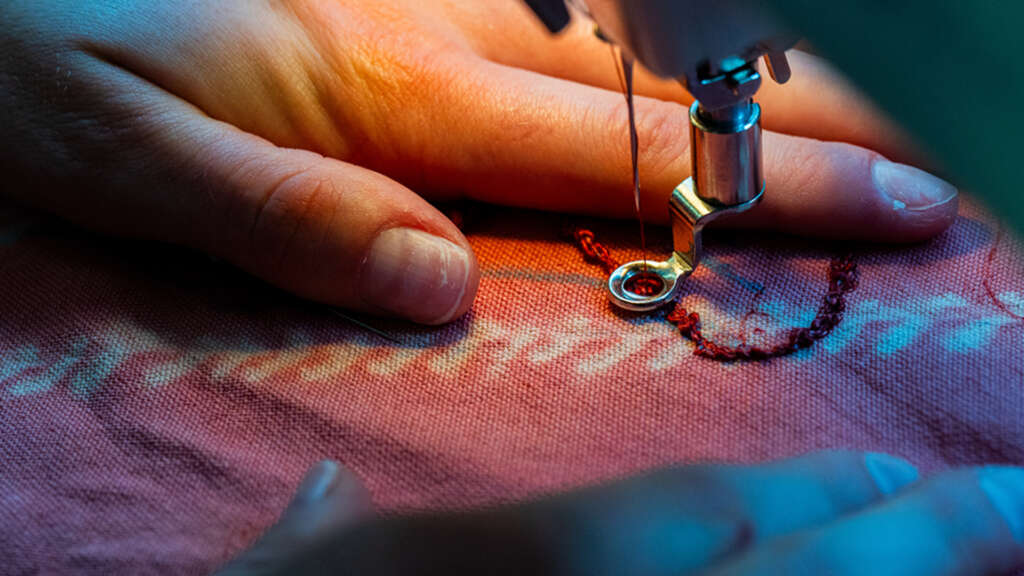
Students bustle around the fashion design lab, soaking fabric in vats of natural dyes, sorting through dried plants to make those dyes, and draping, cutting and stitching their final pieces.
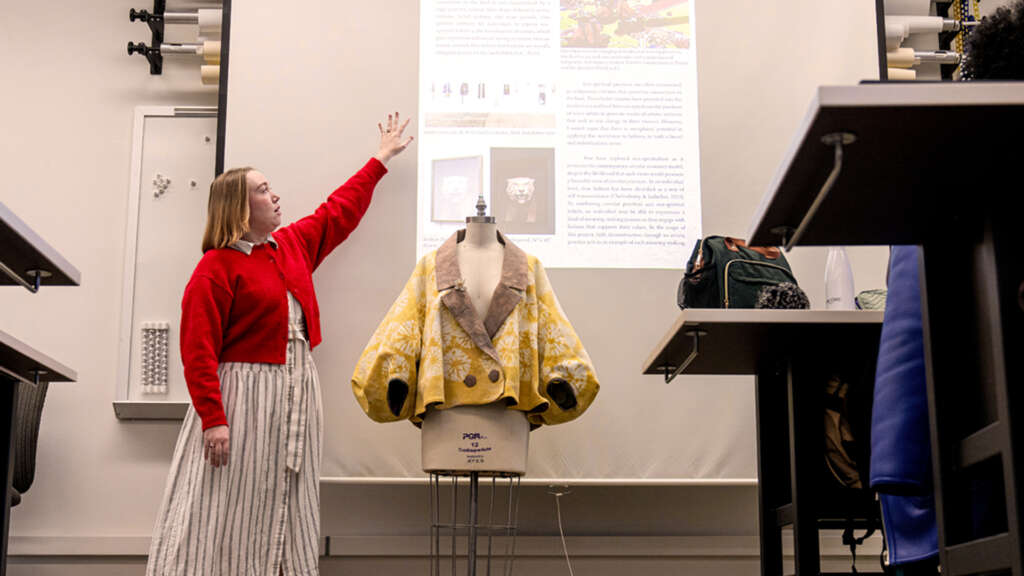
In Sherry Haar’s sustainable fashion and color class, students rethink every step of garment production. They gather inspiration from artists at the nearby Museum of Art and Light, source fabric from a collective in Guatemala, then design and construct their pieces, keeping sustainability in mind throughout the whole process.
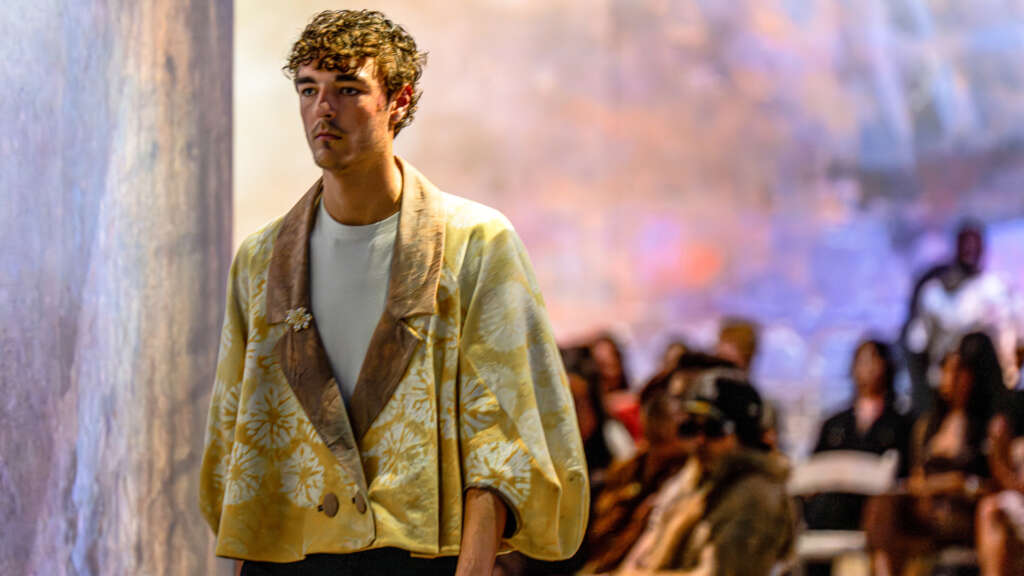
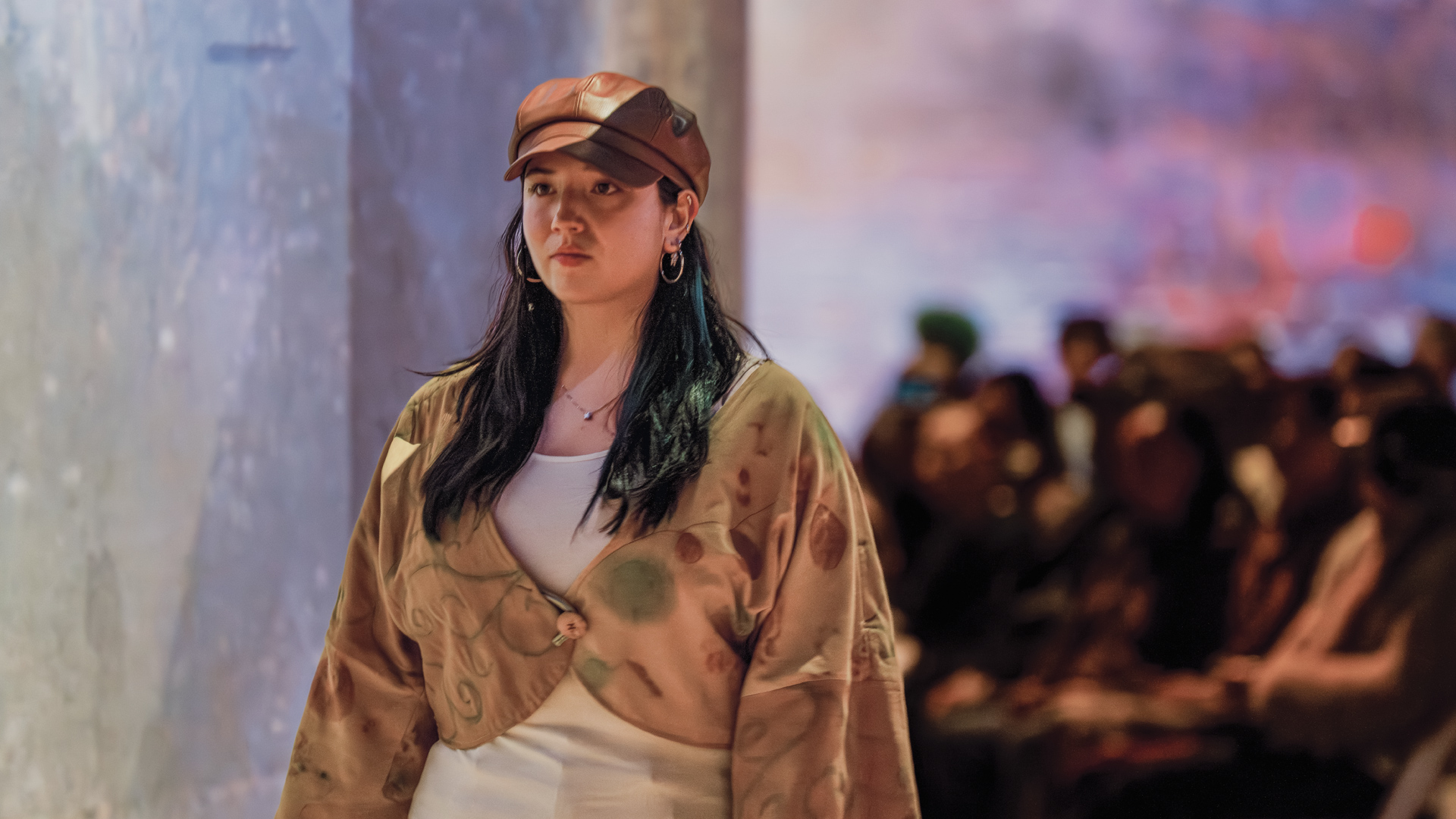
After months of pouring themselves into their creations — from trousers to funky handbags — designers show and sell their work at a showcase event.
We followed this creative class from initial design concepts to dyeing (and redyeing in some cases) to runway success and ultimately sales.
Shades of success
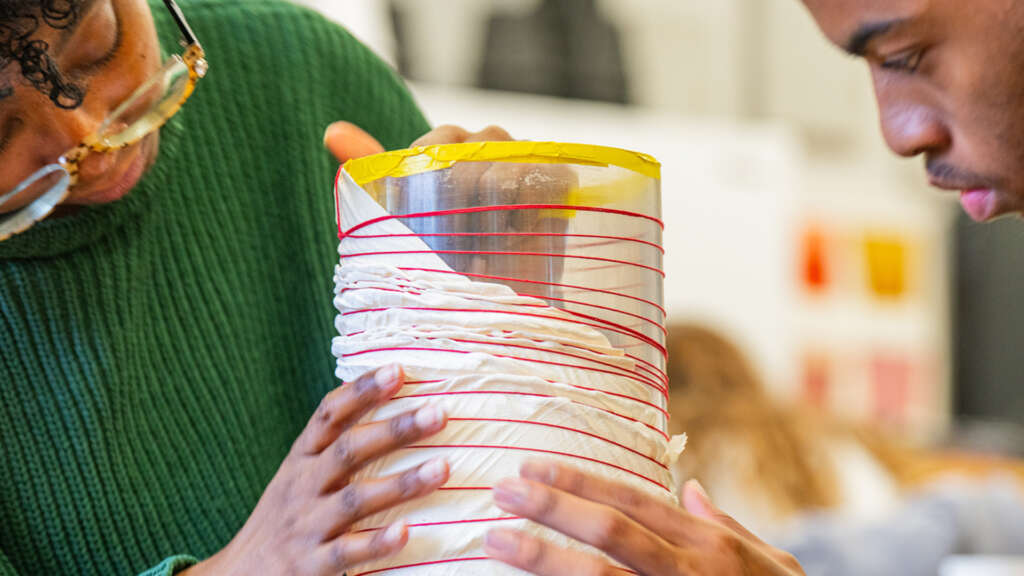
Rethinking and retrying techniques were part of the process Sierra Chase and Jesse Jackson experienced while working on their handbag.
“When you come to a design class, you have a rough idea of what you’re going to do, but the final outcome isn’t always necessarily what you thought was going to happen,” said Jackson, a senior in fashion studies.
“Like with natural dyes,” adds Chase, a master’s student in fashion studies. “Sometimes they take really well, and sometimes you have to do it a couple times to get the color you want.”
When Chase and Jackson rinsed their cloth, the color was more sky blue than the midnight hue they wanted, which led to more rounds of dyeing and rinsing. And that brought to light another key aspect of the class: sustainability.
“The chemicals in our dyes are as sustainable as possible, but you still have to account for how you dispose of them — in a sink or outside,” Chase explained. “With all the rinsing, you think about all the water you’re using.”
Even with most students nearing graduation, this class brought new experiences along with a few knockdowns.
“We did go through a linear path of learning about natural dye, how to achieve the results we wanted and what the different methods are, but there was also a lot of openness to experimentation built into the class,” said Reannan Boisvert, a doctoral student in the sustainable fashion business program. “I hadn’t had a class before where you’re really welcome to experiment and make mistakes.”
The one predictable thread throughout the class was unpredictability. From redyeing to restitching to starting over with a new design, students turned their flops into fabulous creations.
“The wonderful thing about engaged learning is the opportunity to fail for a bit and to have to rethink your design and still get it done,” Haar said. “We do that all the time in the fashion industry, so it’s beneficial to have it as part of the course project.”
Reshaping the fashion world
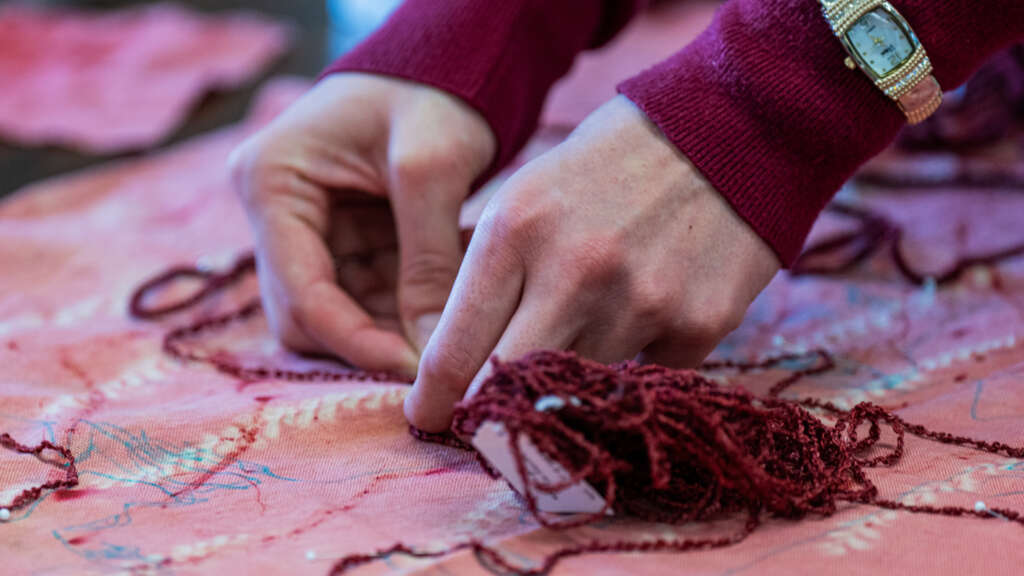
Much of K-State’s fashion studies program focuses on sustainability, but this class added a global twist. The organic, handwoven cloth used was purchased from a women’s cooperative in Guatemala. Since 2016, K-State has been partnering with these women, helping increase their earnings by 13%, up from $1 a day.
“My views of the fashion world have definitely changed since coming into this class,” said Ezra Peters, a senior in fashion studies. “Having a personal connection with the Guatemalan fabrics and knowing that what I’m creating is because of other people’s hard work brings a sense of pride to my work.”
While each student worked on their own design, they all collaborated to conserve resources.
“To save water, we all used the same soaking bucket,” said Anissa Smith, a senior in fashion studies. “If something didn’t come out the way we wanted, we saved it because it could still be used by another class or for another project. Our generation going into the industry is really pushing the sustainability factor. So this class helped prepare me for the future.”
Global questions, local answers
The goal of Haar’s class is to transform the global fashion supply chain through sustainable strategies and a circular economy.
“Are we being socially responsible with the makers? Are we being environmentally responsible with the dyes? Can the product we make be disposed of naturally or returned to the fashion cycle?” Haar asked. “This is the overarching aim of our class — to keep these questions in mind when making decisions.”
Natural coloration is a big part of the class, and many of the dyes they use are found in native prairie plants grown on campus, at the Sunset Zoo or in Haar’s own dye garden.
“I didn’t realize how interconnected everything can be in sustainable fashion before this class,” Boisvert said. “To dye my cloth, I used marigolds I grew in the natural dye garden at Sunset Zoo. I had a wonderful experience caring for the garden and finding myself engaging with nature that way. Being able to use the flowers I grew, harvested and dried added a bit of self-expression to my piece.”
Buying with care
With sustainability top of mind in the classroom, students took those lessons home to their own closets.
“This class made me think more about how I shop. I’m more intentional now,” Chase said. “I think about what meaning went into the piece and how it was sourced. Now I make sure the pieces in my closet can stay in my closet more than a year.”
And they’ll take those lessons with them as they start their careers, demanding accountability from designers, fashion houses and consumers alike.
“We can hold ourselves accountable. We can still produce clothes and have fun with fashion but be careful with what we’re doing,” Jackson said. “And we can encourage the big companies to take accountability and put strategies into place to make sure waste isn’t happening.”
Coming full circle
Fashion students experience the full circle of the global artisan supply chain through this class — sourcing their fair-trade organic cloth from Guatemala, harvesting the buttery shades of marigold and brilliant blue indigo that brighten their creations, and partnering to use their resources responsibly.
Then comes the big reward: popular acclaim on the runway and in the storefront.
With a 360-degree understanding of the sales model, these students are ready for any fashion-biz challenge.
“This is a safe space to apply skills in market research, design, quality control and marketing,” Haar said. “Students dig deep, learn about themselves, resolve the unexpected, and honestly, that’s usually the best part.”