While AI can’t solve every problem, in the right hands, it’s helping researchers make mind-blowing discoveries.

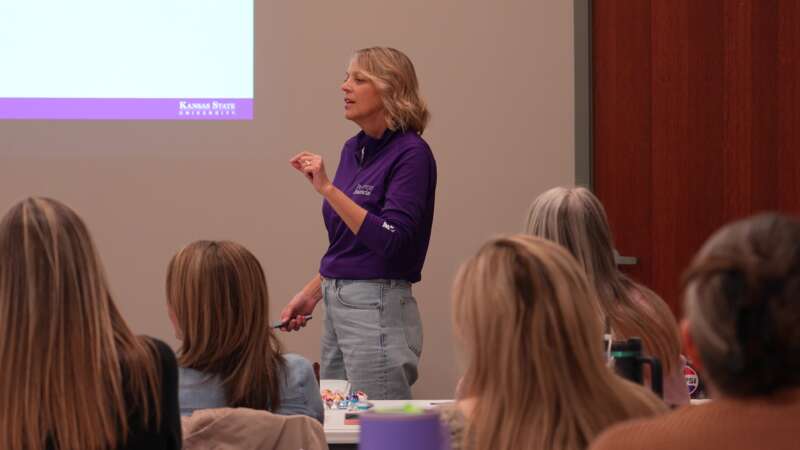
Melanie Derby, mechanical engineering professor, runs the Cooling and Heating Innovation Lab. With experiments on the International Space Station, she and her K-State colleagues find solutions to freezing on Earth, and AI is opening new possibilities in their research. Derby co-chaired K-State’s AI task force and is a faculty representative on the AI stewardship committee.
In the age of AI, what’s the most important skill you can teach an engineer?
Something that remains unchanged is the need to teach critical thinking.
In engineering, we get a solution, and it might be one that we’ve calculated. It might be from a computer system. It might be an AI solution. Your number one question as an engineer is to ask, “Does this make sense?” That critical thinking is essential.
How does AI impact you professionally?
I’m doing a research project with Amy Betz and Hande McGinty, and we’re studying condensation heat transfer. That’s an important process in a lot of mechanical engineering systems. We’re using a microscope to take videos of the condensation and freezing process. Normally we would have to manually reduce our data. We have a lot of optical data, so the data we could extract from the videos was quite limited.
Dr. McGinty’s team built an AI neural network to identify droplets and determine if they’re liquid or ice.
It’s been amazing! The amount of information we get is mind blowing compared to people manually circling things on a computer. The system is telling us what droplet diameters they are, how much of the surface is frozen or not frozen. And we have the possibility to track a droplet through its life. Does it merge with its neighbors? Does it disappear? Does it freeze? We’re able to get an amazing amount of information.
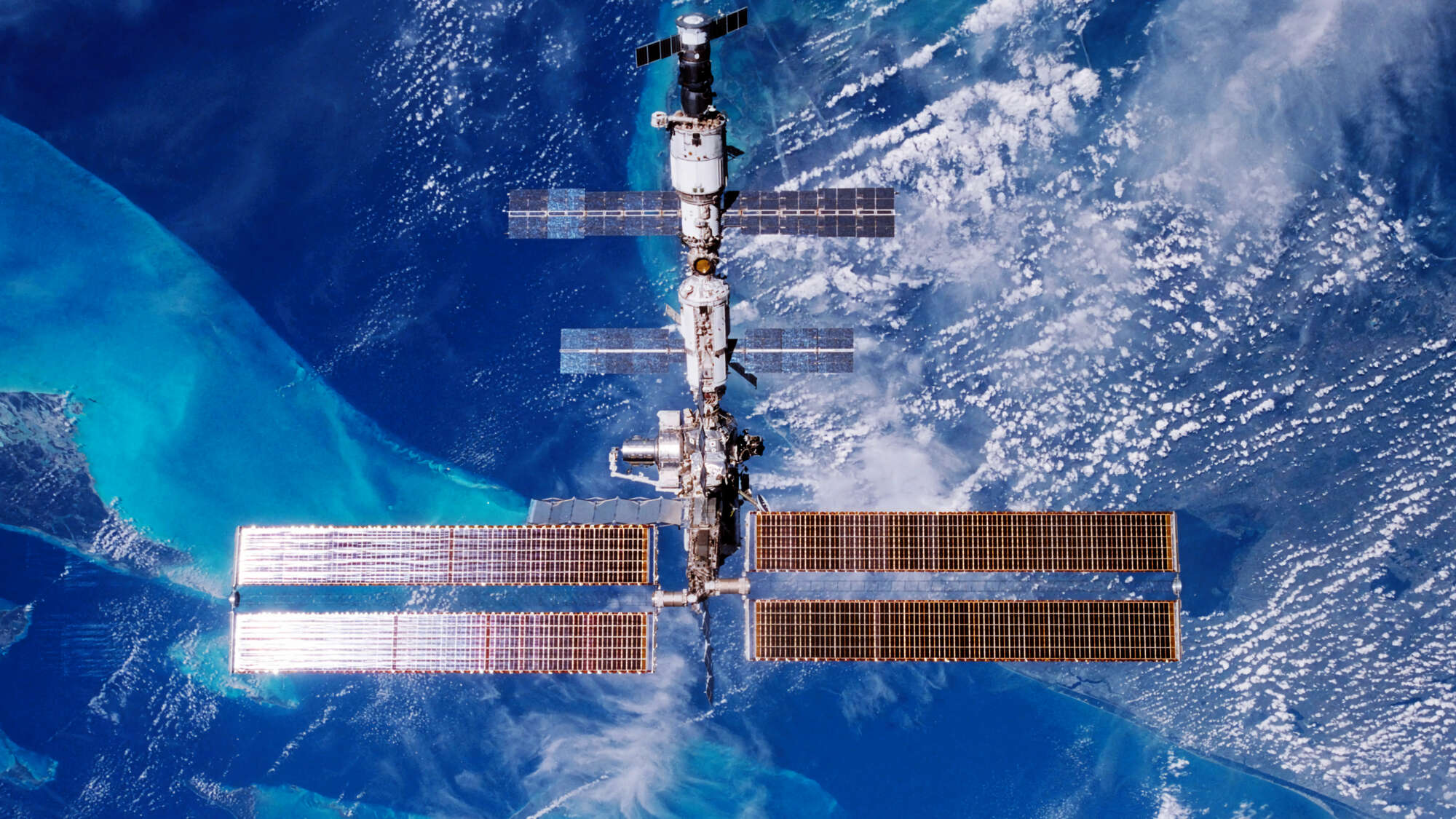
One of the coolest things about this project is they will be running some of our experiments on the International Space Station. So we’ll be able to use our AI system to analyze data that we’re collecting in our lab on Earth and then on the ISS and compare the impacts of gravity on this condensation and freezing process. AI is playing a key role in getting us information and data.
How does knowing the difference in condensation on Earth and space help society?
Gravity plays a role in a lot of processes, but because gravity is always there, it’s hard to understand how big a role it plays. Being able to do experiments on Earth and in space, we can tease out how much gravity affects the condensation mechanisms.
And there’s a gravity-driven airflow that you may not even think about but exists all the time. If you have a hot surface in a cold room, there’s going to be some natural circulation. But it’s very hard on Earth to experimentally remove that. So we’re excited about the ability to look at the same process in space and on Earth to tease out the impact of gravity on available water in the air and in natural circulating airflow. This helps us understand how surfaces freeze, so it helps us understand crops freezing or roads freezing.
What is your take on AI as it pertains to your work?
It’s a new tool and with any tool, there are pros and cons, so you want to understand how you can use it well.
Seeing the capabilities of AI as a tool maybe causes you to think about things differently. It’s becoming increasingly important to be able to explain things. People can produce more polished documents, but do you understand it? Can you explain it? It all goes back to critical thinking.
As a member of K-State’s AI stewardship committee, what is K-State doing right?
As a faculty member who conducts research, having access to K-State’s AI consulting is important. Every field is using it differently. So having that personalized advice and feedback is something I think faculty are really excited about. How useful AI is depends on the field. In some fields it’s a useful tool, but in others it’s not. AI is not the solution for every problem.